Clear your alert backlog with the evidence to defend every decision
Your team knows which rules are generating poor alerts. The problem is justifying what to do about the backlog they've already created. Fortify lets you re-run improved rules over historical alerts, see exactly how the backlog changes, and package the evidence you need for your regulator.


Trusted by leaders in finance and technology








The backlog keeps growing because clearing it feels too risky
Most compliance teams know which rules are generating poor alerts. The detection logic has moved on – but the backlog those old rules created is still there, and every alert still needs to be worked or justified for closure.
That's where teams get stuck. Thousands of alerts from rules you've already improved, consuming capacity that should be spent on real risk. Your analysts end up working through noise instead of preventing financial crime.
Fortify gives you a way to clear the backlog with evidence behind every decision – so your team can focus on the work that actually matters.
What changes when backlog clearance is defensible
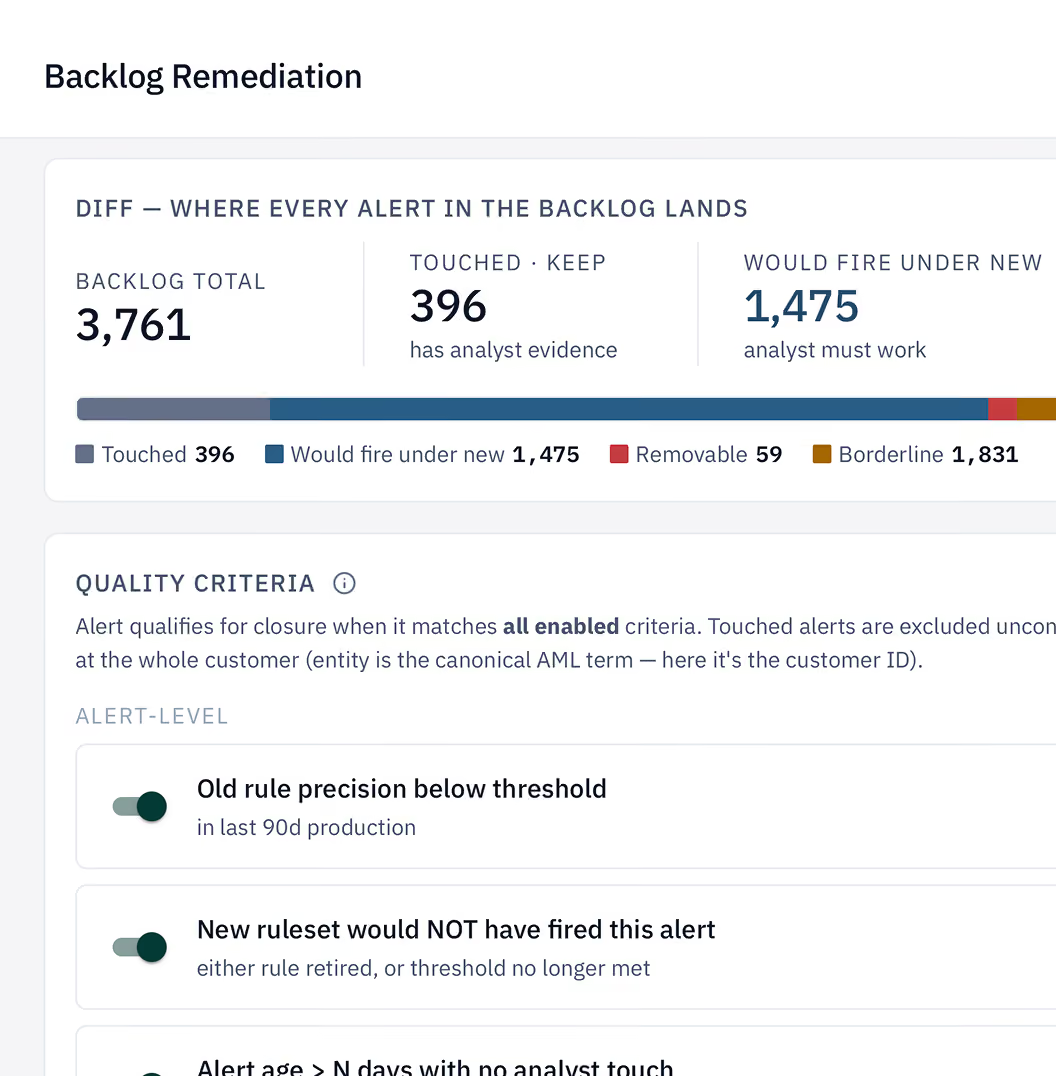
Model the impact of different backlog reduction methods
Test different clearance approaches – from updated rules to risk-based thresholds or exclusion logic – and compare how each one changes backlog volume, risk distribution and residual exposure before you take action.
Focus your analysts on alerts that still matter
When you can identify which alerts your improved rules would still generate, your analysts spend their time on genuine risk – instead of working through thousands of alerts from rules you've already moved on from.
Defend the trade-off to your regulator
Improved rules generate fewer alerts – and regulators will ask about the difference. Fortify packages the statistics, rationale and audit trail to justify every alert you close, including the ones your new rules would not have caught.
A controlled, evidence-led process from evaluation to resolution
Backlog clearance follows three stages. Each one builds on the last – so by the time you take action, you already know the impact and can justify every decision.
Model the impact before you take action
Apply different backlog reduction methods to historical alerts and compare the impact of each approach. See which alerts would remain, which would fall away, and how the overall risk profile changes – so every clearance decision starts with a method you have consciously chosen.
Test different backlog reduction methods against historical alerts
Compare the impact on volume, risk distribution and residual exposure
Choose the approach your team is comfortable applying before any alerts are closed
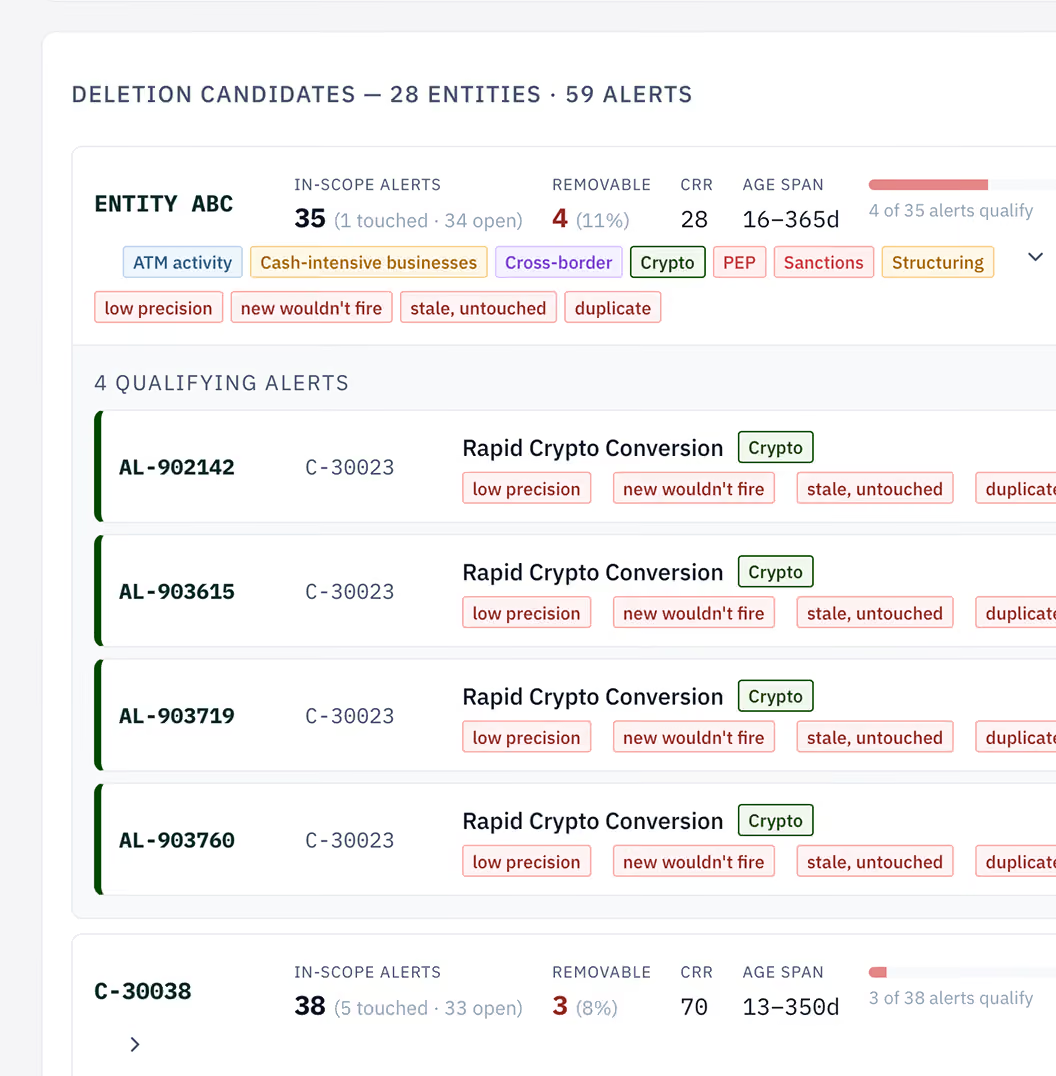
Understand how each method changes the backlog – and where to focus
Compare your original backlog against the modelled results to see differences in volume, risk and priority – so you can direct your team to the alerts that matter most.
Compare alert volumes and risk distribution across different reduction methods
Identify high-risk alerts that require immediate investigation
Prioritise your clearance plan based on evidence, with full visibility into the rationale
Take action with complete auditability
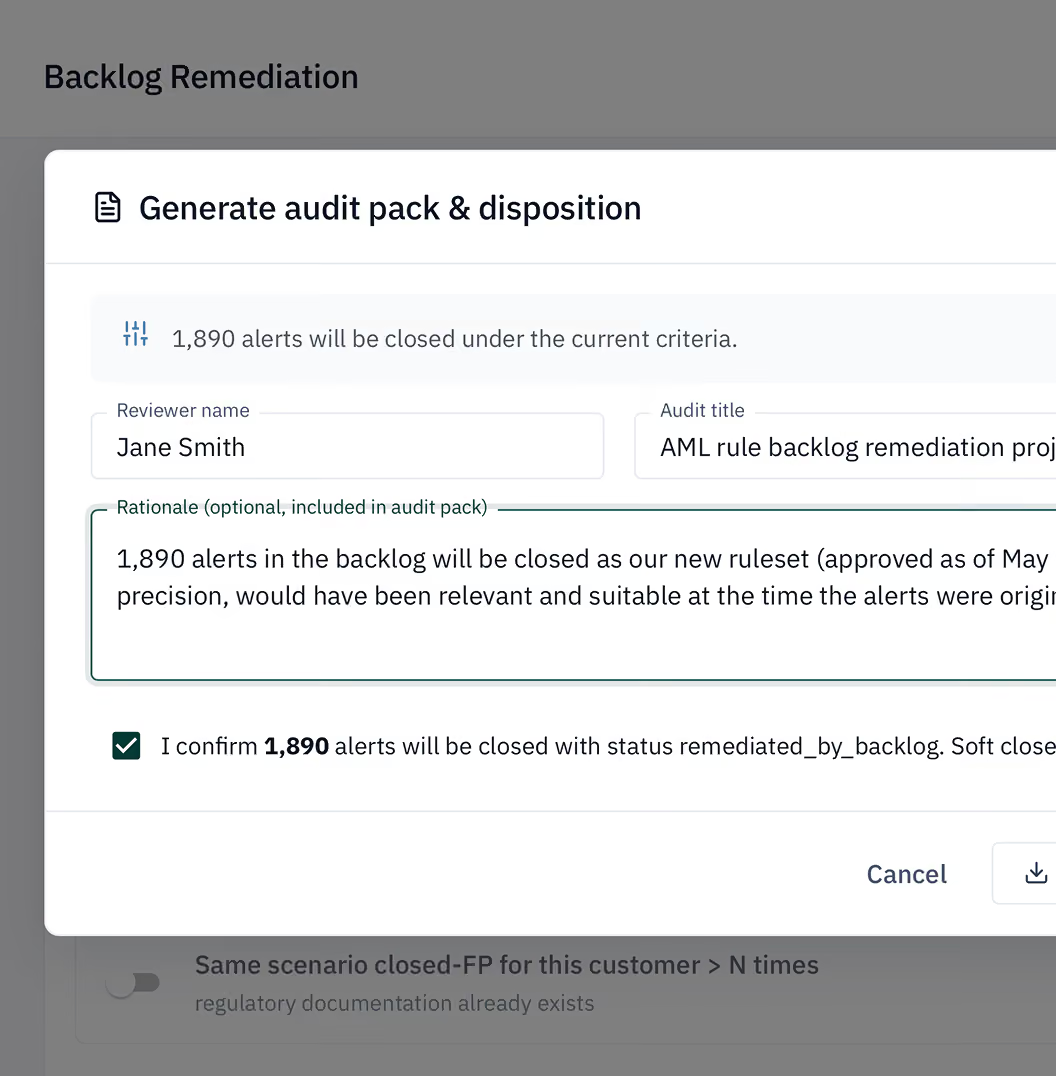
Close, deprioritise or escalate alerts with every decision fully documented – including the data that informed it, the rationale behind it, and the outcome it produced.
Take consistent, documented action across backlog alerts at scale
Capture rationale and supporting evidence automatically for every decision
Generate a complete audit trail – reviewable by internal stakeholders or regulators at any point
Months of backlog cleared in hours
Up to 70% of alerts resolved automatically
100% audit-ready decisions
.avif)
"We had 18 months of backlog and no clear way to justify clearing it. Fortify gave us the evidence to act – and the confidence to defend every decision we made."
Built for confident decisions and scalable throughput
Fortify brings together processing speed with the evidence and visibility you need to make clear, defensible decisions at scale – so clearance is something you can sign off, report on, and stand behind.
Reprocessing that shows cause and effect
Fortify applies your updated rules to historical alerts and shows you the outcome – so you can see exactly what changed, why it changed, and what that means for each alert's risk profile. This is the evidence base your clearance decisions stand on.
Built-in governance for bulk decisions
Closing thousands of alerts at once is operationally efficient but regulatorily dangerous – unless every decision is individually documented. Fortify captures the rationale, the data and the outcome for each alert, even when actions are taken in bulk.
Connected to your live monitoring
Backlog clearance and ongoing monitoring run on the same platform. When you improve your rules to clear the backlog, those same improvements apply to your live detection – so the backlog you clear today is a backlog that stops regenerating tomorrow.
Don't just chat with your data. Act on it.
Some tools give you an agent in a chat window. Fortify brings the intelligence into the workflow itself – so your team can see the risk clearly, understand the context, and take action fast, without leaving the screen.
You choose how much your AI does. From surfacing insights to autonomous action, you set the boundaries. Every decision is visible, auditable, and yours to override.

Backlog clearance with full defensibility is built into Fortify AML
Related articles
Regulatory guidance and industry context for financial crime professionals.

.avif)


Turn your AML backlog into a closed chapter
Book a 30-minute walkthrough and we will show you how Fortify reprocesses, compares and resolves backlog alerts – with the evidence to defend every decision.

