File faster, file better
SAR narratives drafted from your case data. Evidence assembled automatically. Review, approval and submission in one workflow. Your team spends less time on paperwork and more time on the decisions that matter.

.avif)
Trusted by leaders in finance and technology








What changes when regulatory filing stops being a bottleneck
Draft in seconds, not hours
Generate SAR/STR narratives directly from the
case data your analyst has already assembled – transaction patterns, customer profile, investigation findings. The analyst reviews and refines rather than writing from a blank page.
Evidence ready when you are
Every piece of supporting evidence referenced in the narrative is compiled automatically from the case file. No switching between systems, no manual retrieval, no risk of missing attachments.
Review and submit in one place
Configurable approval chains with clear status tracking and SLA visibility. Once approved, filings are formatted for the relevant FIU and submitted – or exported in the required format. The full lifecycle lives in one system.
From case conclusion to filed SAR – in one connected workflow
SAR/STR preparation is where investigation conclusions become regulatory action, but it's also where work stalls. Gathering evidence, drafting the narrative, chasing approvals, formatting for submission: each step is a manual handoff. Every handoff costs time and adds risk. Connect the full filing lifecycle to the case that triggered it, so analysts refine rather than recreate, nothing is lost, and the audit trail is built as you go.
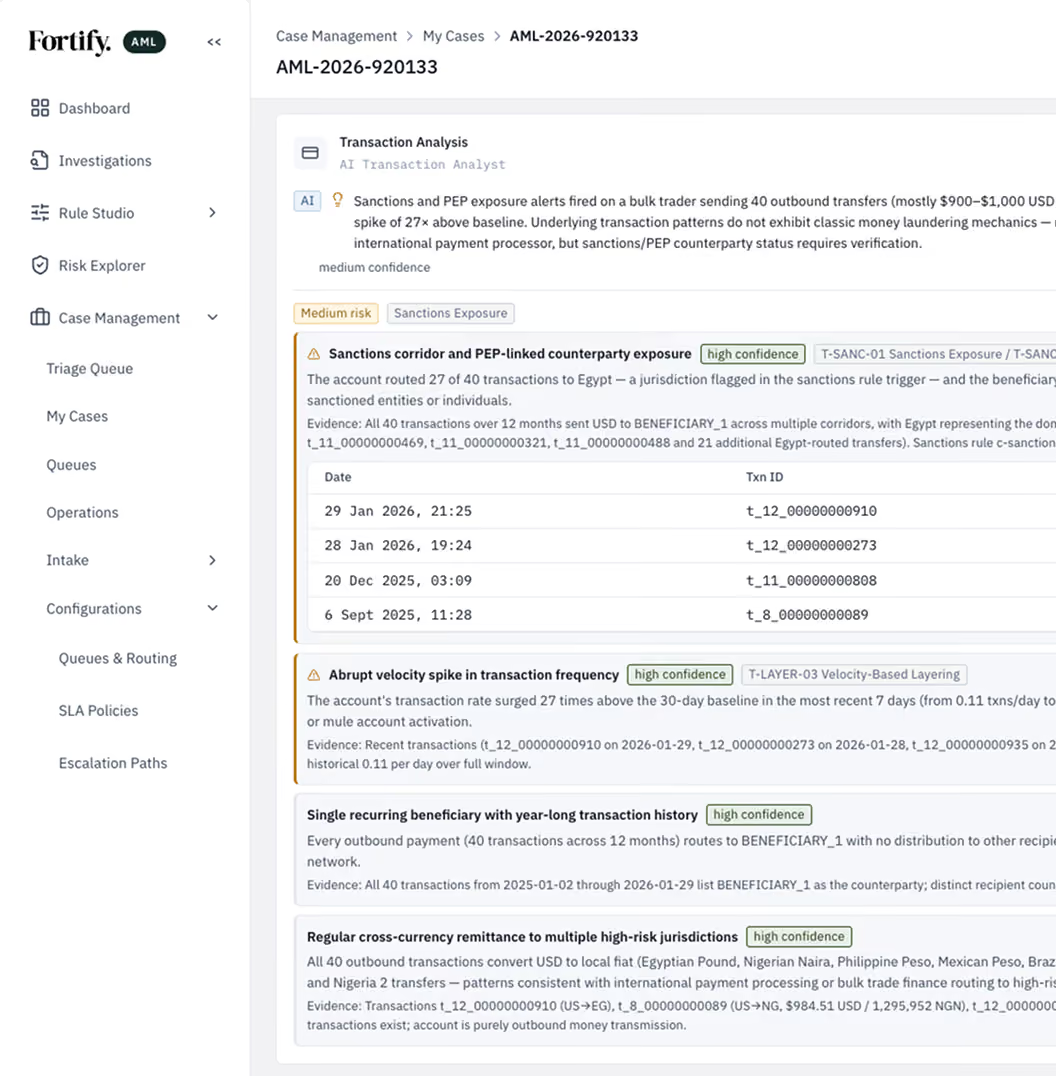


Narratives written from the work you've already done
Your analysts have already identified the suspicious activity, documented the patterns and recorded their findings. That work becomes a structured SAR/STR narrative in the format your FIU expects – so your team shifts from drafting to reviewing.
Draft narratives generated automatically from case data – transaction history, customer profile, investigation notes and analyst findings
Narrative structure adapts to the jurisdiction and FIU requirements
Analyst reviews, edits and approves – full control over the final submission, without starting from a blank page
Consistent narrative quality across the team, regardless of who wrote the original case notes
Every piece of evidence, already attached
Most filing delays come from evidence gathering – retrieving transaction records, screening results and investigation notes from separate systems. Everything referenced in your narrative is compiled automatically from the case file, so your team never has to chase it across systems.
Supporting evidence is assembled from the case record and attached to the filing automatically
Transaction records, screening results, risk scores, investigation notes and alert details are included without manual retrieval
Quality checks flag missing evidence, inconsistent timelines or narrative references that don't match the attached documentation
Clear approval chains with full visibility
Filing review is often the least visible part of the process – drafts sit in inboxes, approvals happen over email, and nobody has a clear view of where things stand. You and your MLRO get a single view of every filing in progress.
Configurable review and approval workflows that match your team's structure and governance requirements
Reviewers see the narrative, the evidence and the full case context in one view
SLA tracking and escalation paths ensure filings don't stall in the approval queue
Every review action is recorded with timestamp and reviewer identity for the audit trail
Submit, track and follow up – without leaving the platform
Once a filing is approved, it needs to reach the FIU in the right format. After submission, your team needs to track status and manage any follow-up requests – both happen in one place, without leaving your workflow.
Approved filings are formatted for the relevant FIU's requirements – ready for submission through direct integration or export
Track the status of every submitted filing in one place
Manage FIU follow-up requests and link them back to the original case
Complete filing history maintained per case, per customer and per jurisdiction for reporting and audit
Narrative drafting
Evidence assembly
Filing cycle time
Based on results from Fortify customer deployments
.avif)
How it works
CASE ESCALATED FOR FILING
NARRATIVE DRAFTED AUTOMATICALLY FROM CASE DATA
EVIDENCE COMPILED AND ATTACHED
REVIEWED AND APPROVED THROUGH CONFIGURABLE WORKFLOW
SUBMITTED TO FIU IN REQUIRED FORMAT
Every filing is connected to its case, fully evidenced, and audit-ready from the moment it's created.
Built for filings you'd put your name to
A SAR is where your investigation becomes a matter of record with the regulator. How good it is, and how quickly it gets there, is part of how your programme is judged.
Every filing reads to the same standard
The narrative is built from the case itself, so a SAR's quality no longer rides on who worked it or how much time they had. The FIU gets a consistent, well-evidenced submission each time.
Analysts back on the work that needs judgement
Drafting, evidence-gathering and formatting stop being manual, which gives your most experienced people their time back for the calls that genuinely need them.
Filed on time, before backlogs build
Cases move from conclusion to submission without waiting on a blank-page narrative or a lost approval, so the queue, and the regulatory risk that grows with it, stays under control.
Don't just chat with your data. Act on it.
Some tools give you an agent in a chat window. Fortify brings the intelligence into the workflow itself – so your team can see the risk clearly, understand the context, and take action fast, without leaving the screen.
You choose how much your AI does. From surfacing insights to autonomous action, you set the boundaries. Every decision is visible, auditable, and yours to override.

One modular system for fraud and AML, built around how teams actually work
Related articles
Regulatory guidance and industry context for financial crime professionals.

.avif)


File a SAR in minutes
Draft SAR narratives straight from case data, assemble the evidence automatically, and move review, approval and submission into one connected workflow – all audit-ready by default.

