You can see the transaction. You can't always see the risk
Payment processors sit between merchants and cardholders without owning the relationship with either. Risk builds across merchant portfolios, sub-merchant layers and transaction patterns. Fortify connects these signals so your team can act before exposure compounds.

.avif)
Risk builds in the gaps between what you can see
You process the transaction, but you don't control what's behind it: the merchant's real activity, the sub-merchant layer beneath them or the payer on the other side. Fraud and AML teams are expected to own the outcome anyway.
Decisions built on incomplete signals
Merchants are onboarded at a point in time. Their transaction patterns, MCC behaviour and chargeback profiles shift continuously. Batch reviews and periodic reassessments mean the risk profile your team is working from can be weeks or months old.
Sub-merchant exposure rolls up to your thresholds
Sub-merchant and PayFac dispute ratios roll up to your portfolio-level scheme standing. A single high-risk sub-merchant can push your VAMP ratio over the threshold. That exposure sits in a layer you didn't directly onboard.
Approval pressure is constant
Declines affect merchant performance and retention. Missed fraud leads to chargebacks, losses, and scheme threshold pressure. Fraud and AML teams sit between both.
Work with the data you have. Act before the risk lands
Transaction data, merchant attributes, chargebacks and external signals often sit in different places. Fortify connects them across your merchant portfolio, including PayFacs and sub-merchants. Your team can build, test and deploy controls without engineering support or switching systems.
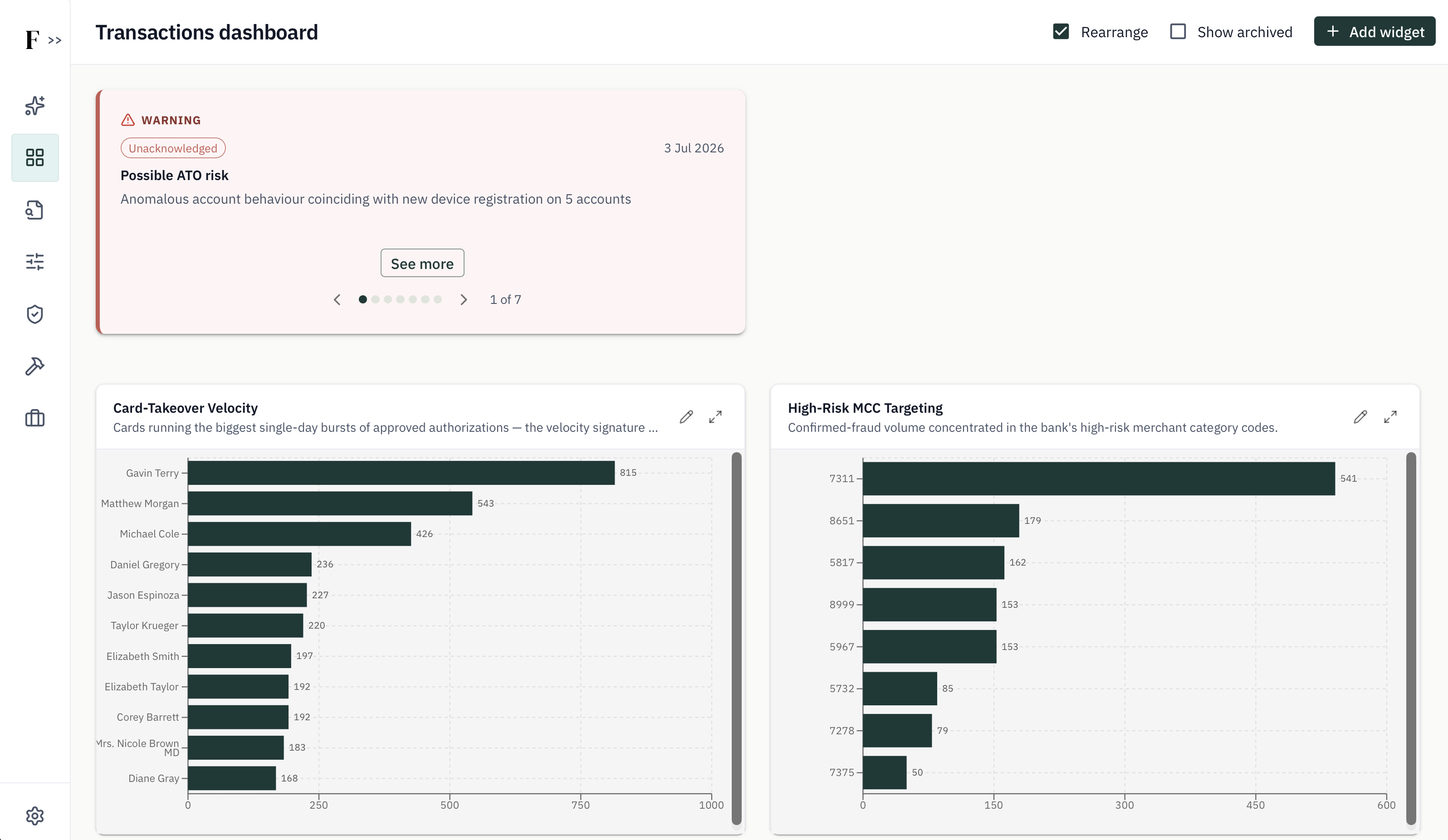
See the risk that's forming
Fraud rarely arrives all at once. Small changes in transaction patterns, merchant behaviour and network connections build a picture before any individual signal crosses a threshold.
Surface coordinated patterns forming across merchant groups and geographies
Identify emerging attack shapes across your portfolio as they develop
Connect signals across transactions, merchants and relationships in one view
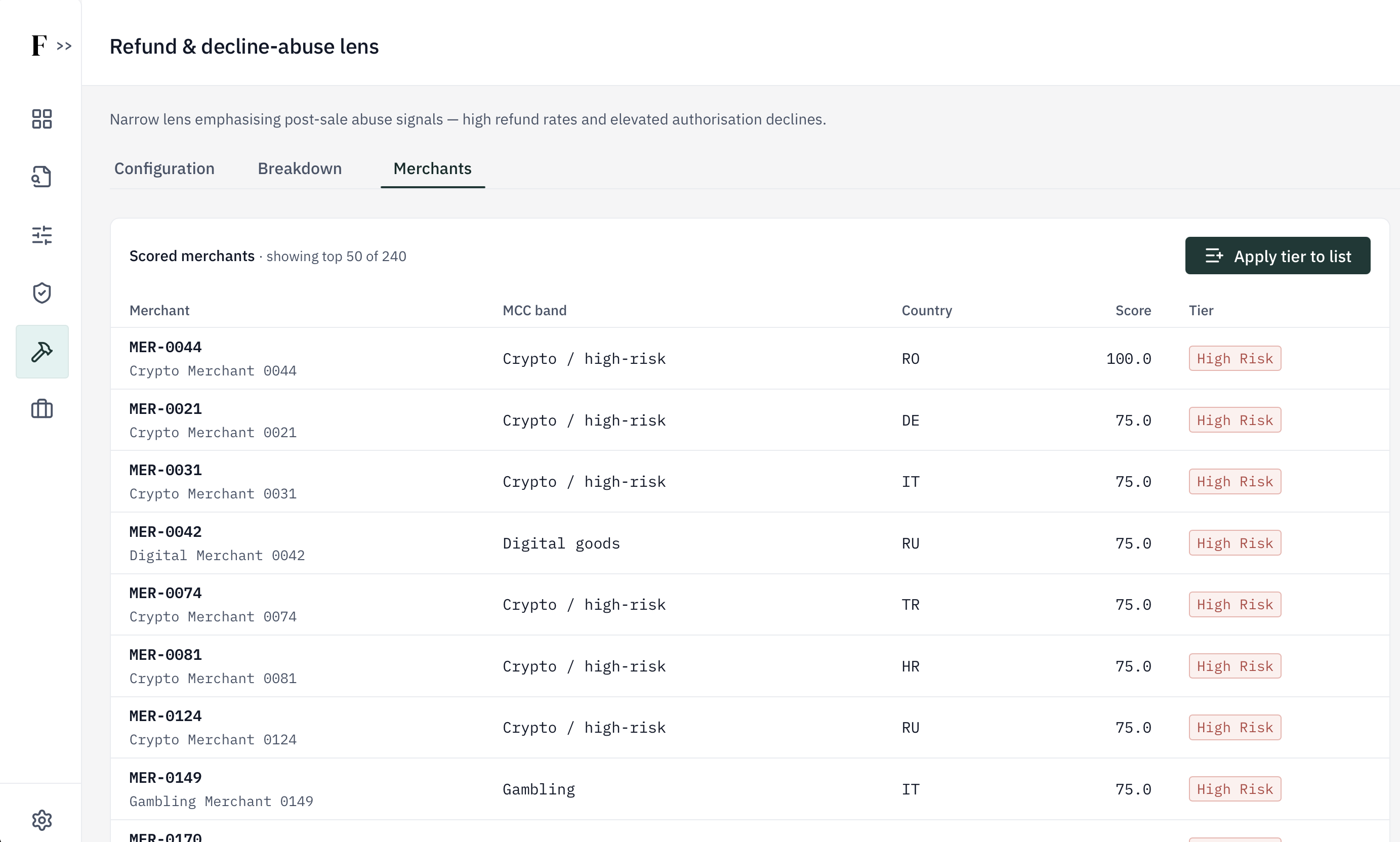
Monitor merchant fraud across your entire portfolio
Fraud exposure doesn't sit in individual transactions. It builds through chargeback patterns, linked accounts and shifting transaction behaviour, across your merchant portfolio including PayFacs and sub-merchants.
Risk ratings update continuously based on transaction behaviour and outcomes
Coverage across PayFac and nested merchant structures
Linked merchants and shared attributes visible at case level
Chargeback clustering and trends surfaced automatically
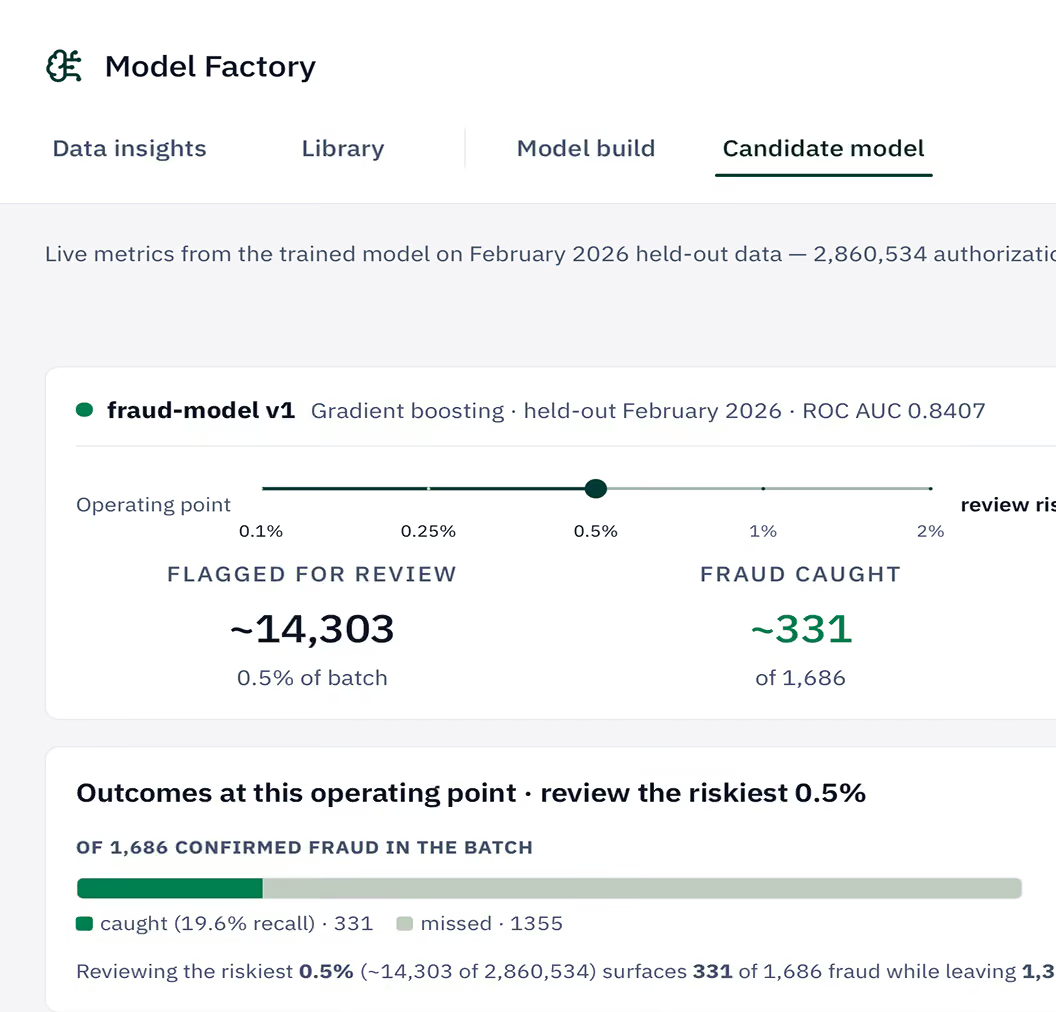
Build a new rule or model in minutes
Payment fraud evolves quickly, especially across new rails and merchant types. When a new attack pattern surfaces in your transaction data, you need a control live that day.
Build a new rule directly from transaction data, without writing code
Retrain or adjust a model the same session you spot the pattern
Test impact on fraud catch rates and approval rates before anything goes live

"We used to set thresholds for a rule in isolation. Being able to simulate its relative impact against the full stack of rules and models we already run is a fundamentally different way of working. The decision is the same – but now we can show our working."


Why choose Fortify
- 01
Works with the data you already have
Transaction flows, merchant behaviour and chargebacks form the basis of detection – no full customer profile required. You can build and test controls without waiting for data you don't have.
- 02
Clear view of merchant exposure
Risk is visible across hierarchies, including PayFac and nested structures, with monitoring that adjusts as behaviour changes. Exposure that wasn't directly onboarded doesn't sit in a blind spot.
- 03
Decisions backed by evidence
Test rules before deployment and understand their effect on approvals and fraud outcomes. Every threshold decision is documented before it goes near your decisioning engine.
Faster response
Better approval decisions
Reduced losses
Based on results from Fortify customer deployments

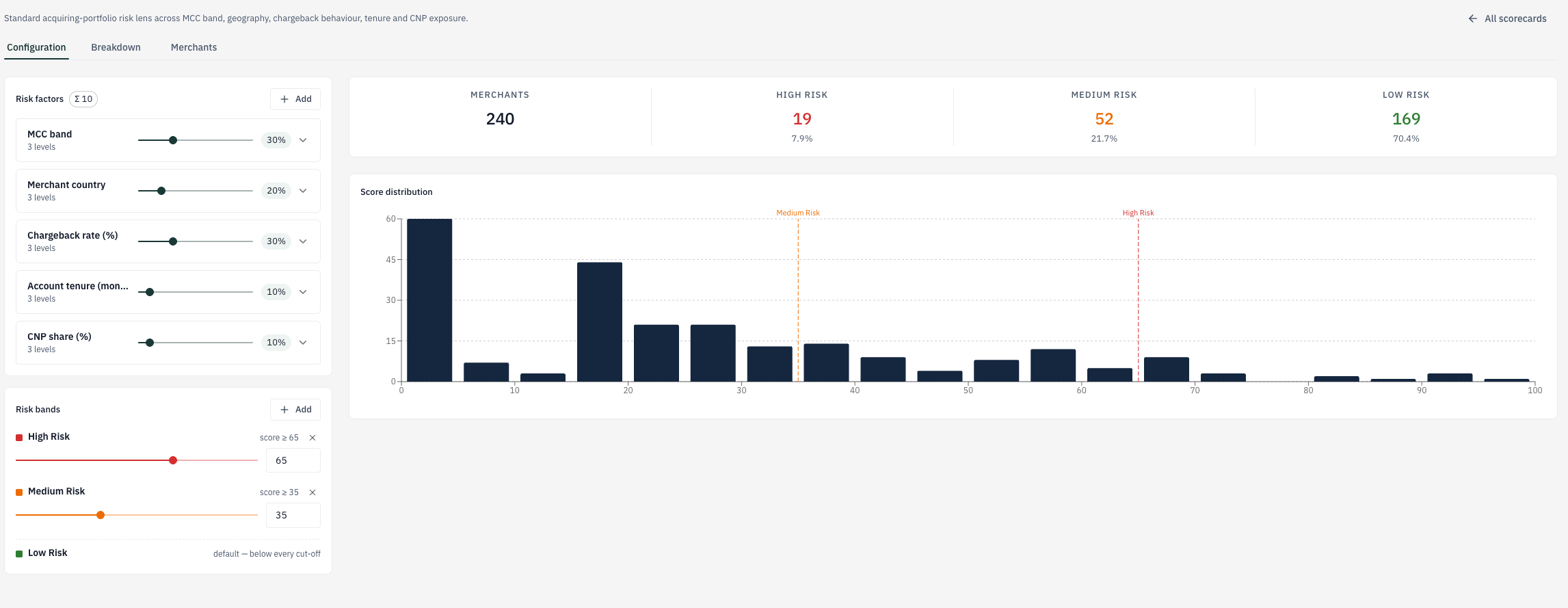
See AML risk before it rolls up to you
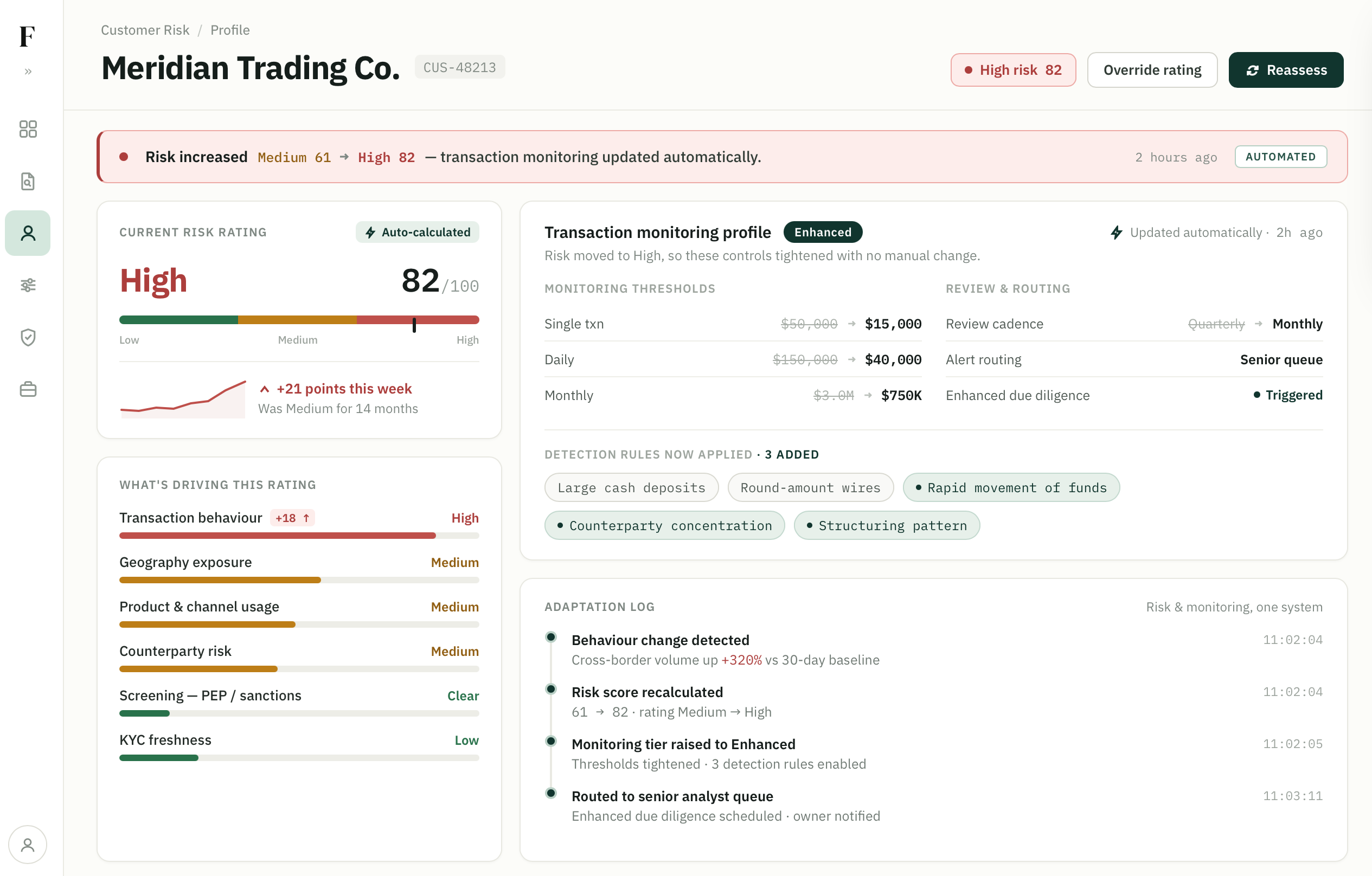
Processors and acquirers inherit AML exposure across every layer of merchant activity. Link merchants and sub-merchants, combine KYB attributes with transaction behaviour and keep risk ratings current. You see concentration risk before it becomes a programme issue.
Link merchants, sub-merchants and related entities to surface hidden exposure and shared principals
AML risk scores that update continuously as transaction behaviour evolves
Portfolio-level views for concentration, outliers and emerging typologies
Detect transaction laundering
A merchant can look compliant while processing on behalf of an undisclosed business or shifting into higher-risk categories. Mismatches between declared and actual behaviour surface early, while volumes are still containable.
Declared vs actual monitoring: MCC drift, unexpected product patterns, behaviour inconsistent with stated business model
Network and linkage signals pointing to third-party processing and hidden merchant relationships
Investigation-ready outputs with the rationale behind each flag and supporting data for escalation
Ready before you're asked
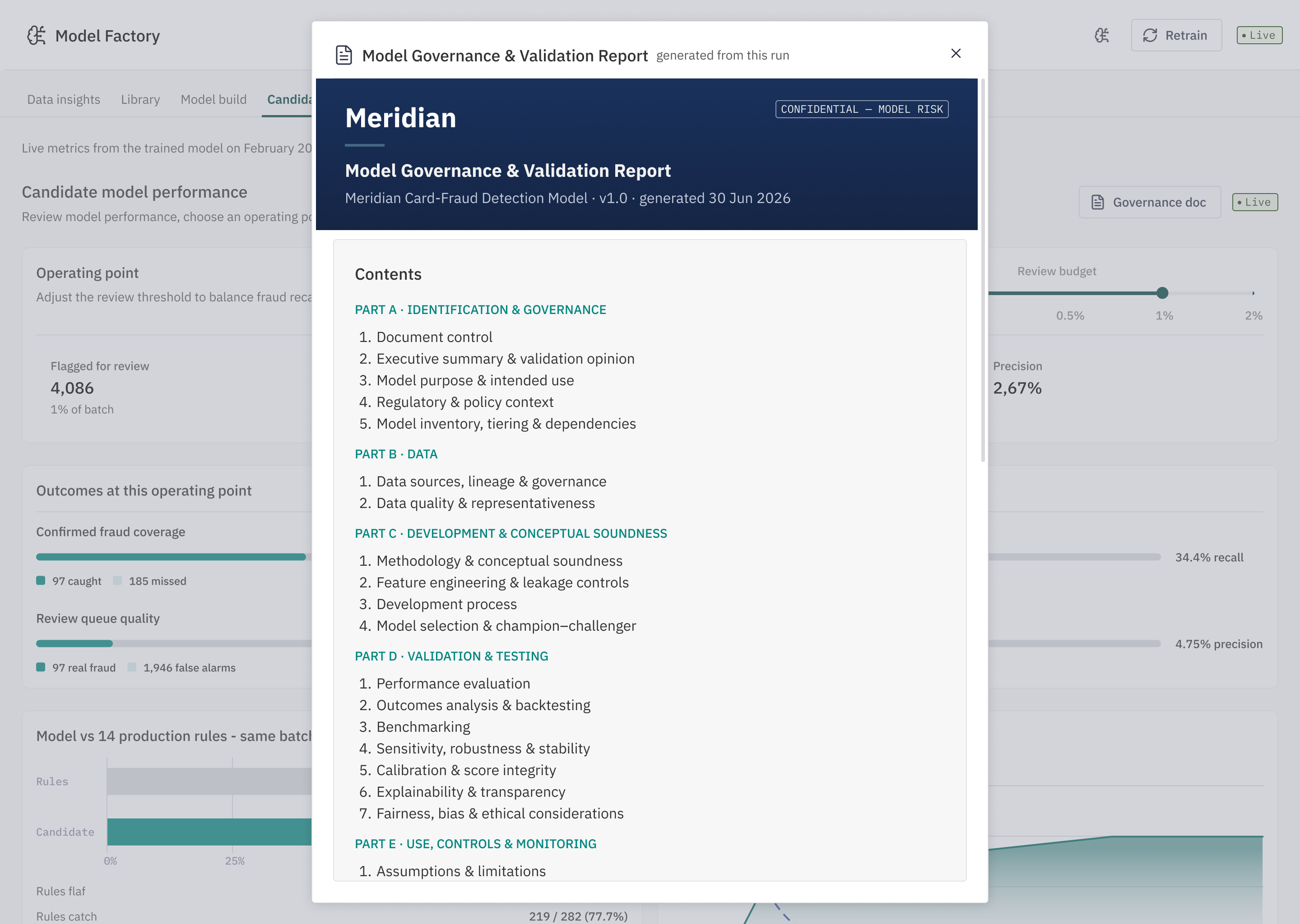
Screening, monitoring and case decisions feed into a single evidence trail so investigations are consistent, auditable and fast to justify across merchants, principals and UBOs.
Continuous screening for principals and UBOs – PEP, sanctions, adverse media – with re-screening on change events
Structured AML case files that capture rationale, evidence and decisioning as work happens
Rule-to-obligation traceability: why a control exists, what it covers, and how it performed
"Our AML exposure never sat in one merchant – it built up across sub-merchants and PayFacs we hadn't directly onboarded. Fortify links those layers, keeps risk scores current as behaviour shifts, and flags declared-versus-actual mismatches before volumes get out of hand. When a regulator asks about a principal or a UBO, the screening history and case rationale are already there. We're catching concentration risk as a signal, not as a programme issue."
Why choose Fortify
- 01
Works with the data you already have
Transaction flows, merchant behaviour and chargebacks form the basis of detection, without relying on a full customer profile. You can build and test effective controls without waiting for data you don't have.
- 02
Clear view of merchant exposure
Risk is visible across hierarchies, including PayFac and nested structures, with monitoring that adjusts as behaviour changes. Exposure that wasn't directly onboarded doesn't sit in a blind spot.
- 03
Decisions backed by evidence
Test rules before deployment and understand their effect on approvals and fraud outcomes. Every threshold decision is documented before it goes near your decisioning engine.
Full-portfolio view
Transaction laundering caught
Audit readiness
Based on results from Fortify customer deployments
Your merchants move fast.
Your controls need to keep up.
Fortify is built for the people accountable when a merchant, sub-merchant or PayFac creates exposure – including the layers you didn't directly onboard. Heads of Fraud, MLROs and risk and compliance teams at payment processors and acquirers, carrying portfolio-level risk and scheme-threshold pressure. The platform is designed by practitioners who've run these functions, and backed by a team that works alongside yours in the day-to-day.
Built by practitioners
Every feature was designed by people who've sat in your seat – running fraud and compliance teams at processors and acquirers, accountable for portfolio-level risk and scheme thresholds. The product works the way your team already thinks.
Your team + our team
Decision-making software backed by embedded expertise. Your fraud, risk and compliance teams get both the platform and the people to run it with.
Support where it helps. Stay in control where it matters.
A payment portfolio generates more signals than any team can monitor manually. Fortify's agents handle prioritisation and pattern detection across your merchant portfolio, so your team can focus on the cases that need a decision.
Highlight emerging risks across merchants and transactions
Prioritise alerts based on exposure and potential impact
Surface areas where coverage is weakening
Every action visible, explainable and adjustable
For teams operating under regulatory scrutiny.

Step 1
Describe the attack. For example: a cluster of bank-detail changes hits your contractor population 48 hours before payday.
Step 2
Get a retrained model in minutes, built from your input and Fortify's detection logic.
Step 3
Test before deploying. Human judgement stays in the loop.
3 minutes. Not months.
One modular system for fraud and AML, built around how teams actually work
Related articles
Regulatory guidance and industry context for financial crime professionals.

.avif)


Built for teams making decisions with incomplete data
Fortify works with payment processors managing merchant risk, approval pressure and fragmented data sources. Controls can be tested, adjusted and deployed without disrupting your core infrastructure.

