Merchant risk lands at settlement. Most monitoring shows up after.
Schemes and regulators hold acquirers accountable for fraud, chargebacks and AML risk across every merchant in their portfolio. That includes sub-merchants they didn't directly onboard. Fortify connects the signals so your team can act before exposure compounds.


The risk lands before the signal does
Chargebacks arrive after the window closes
Chargeback abuse, refund manipulation, transaction laundering and bust-out patterns compound before detection catches up.
One merchant's ratio is your problem
PayFac and sub-merchant dispute ratios roll up to your portfolio thresholds. Their AML and sanctions exposure stays hidden until it surfaces in aggregate.
Sub-merchant exposure is hardest to see
Visa's VAMP and Mastercard's SMMP hold acquirers accountable at the portfolio level. Most teams see how close they are to a threshold when the notification arrives.
Laundering hides from chargeback data
A compliant-looking merchant processing for an undisclosed business won't trigger a chargeback spike. But it creates AML, scheme and regulatory exposure at the same time.
Work with the data you have. Act while exposure is still small.
Transaction data, chargeback history, merchant attributes, settlement signals and scheme ratio data often sit in different places. Fortify connects them across your merchant portfolio, including PayFacs and sub-merchants. Your team can build, test and deploy controls without engineering support.
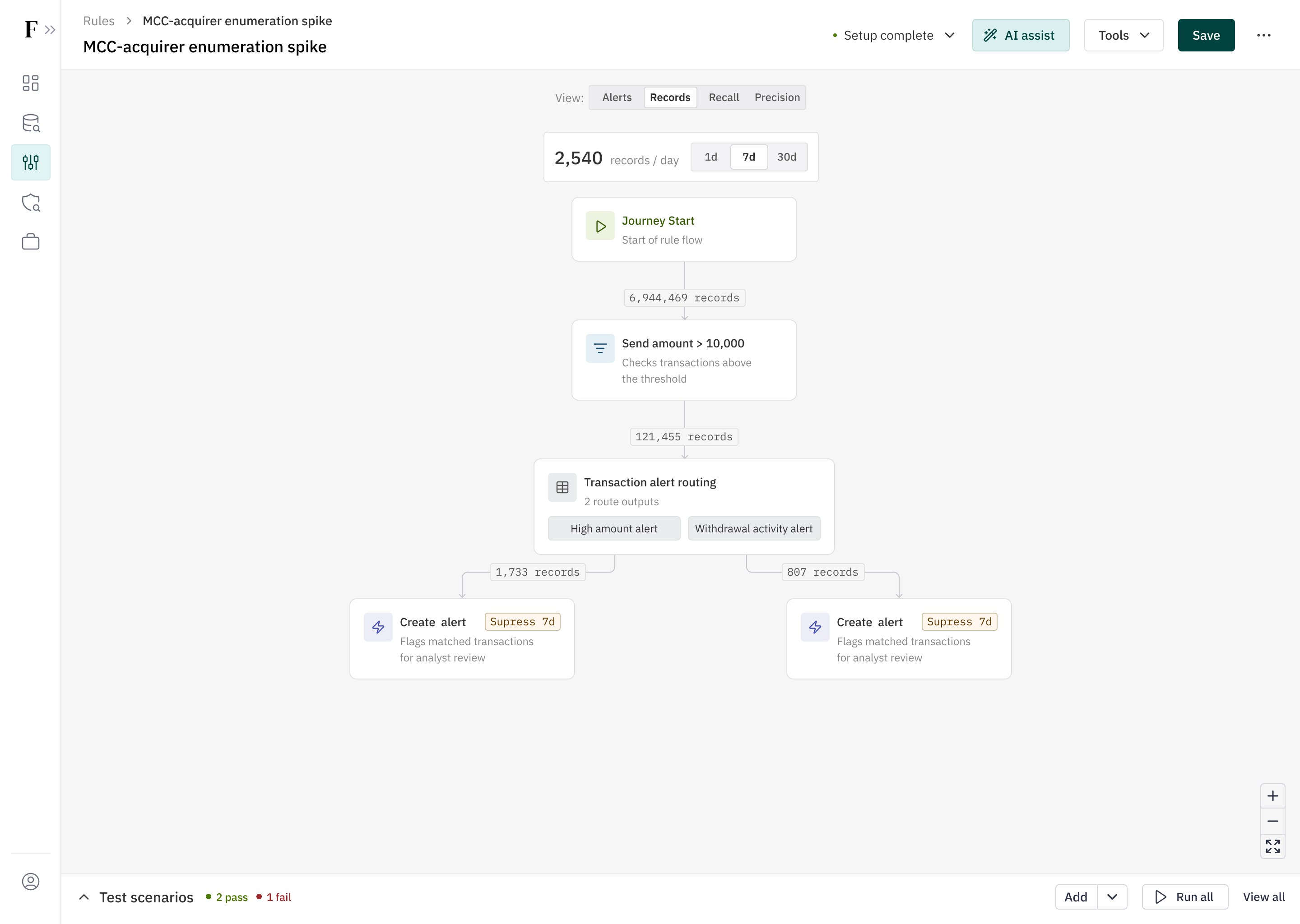
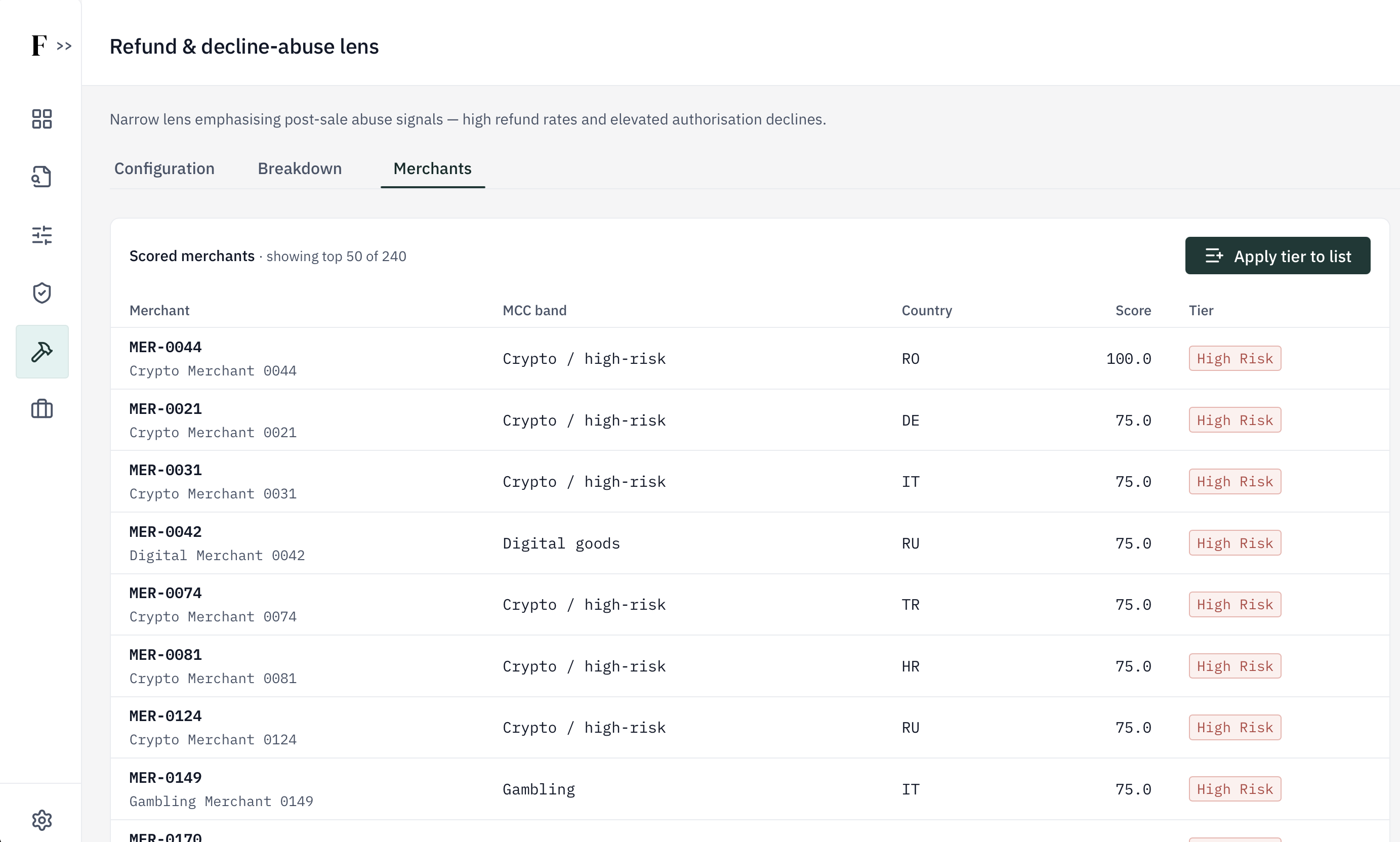
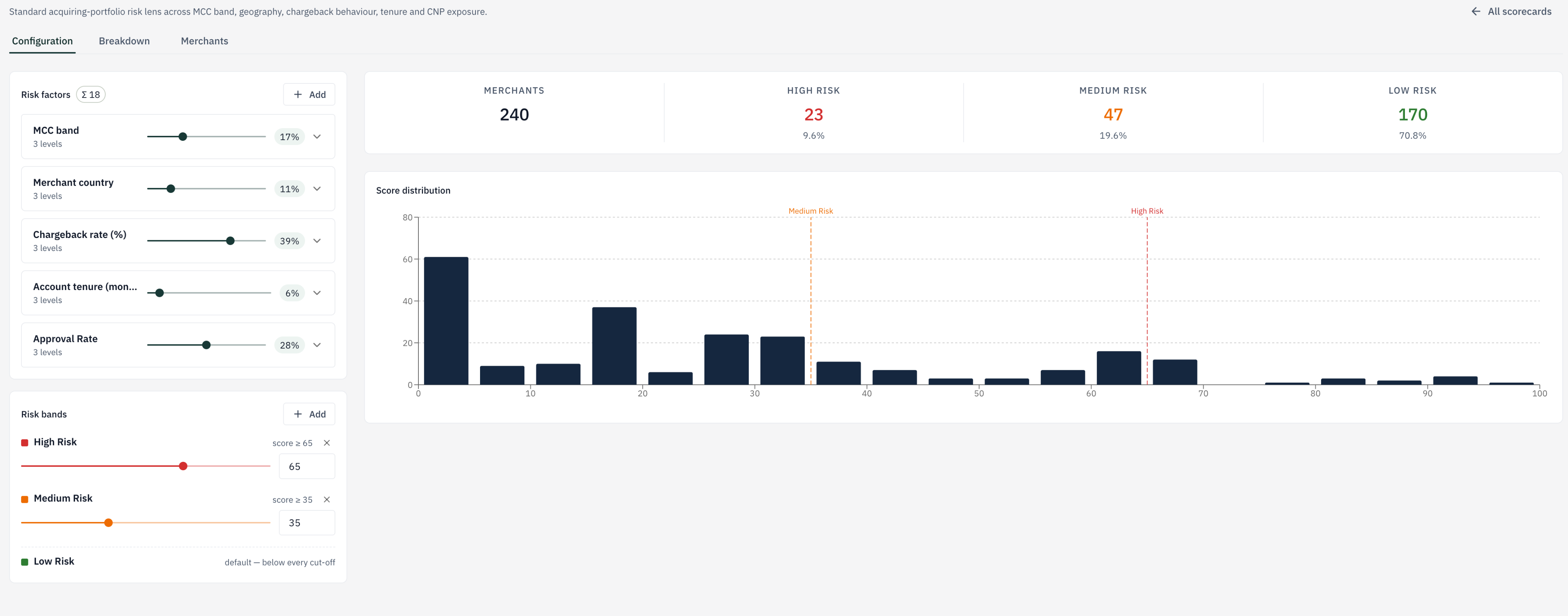
Push control changes live in time to act
Settlement windows are short. When a dispute spike or chargeback pattern surfaces, the gap between spotting it and closing it determines whether the loss stays contained. Settlement timing, dispute signals and merchant behaviour sit in one detection layer.
Write and amend controls without SQL or engineering support
Simulate alert volume and false positive impact before deployment
Stage and validate control changes before going live
Prioritise by exposure and risk concentration, not just alert count
Find coordinated abuse across merchants, PayFacs and sub-merchants
Merchant fraud moves through PayFac hierarchies, shared attributes and coordinated behaviour that only becomes obvious across the portfolio. Linking entity relationships and behavioural signals makes patterns visible while they're still small.
Entity linkages across merchants, sub-merchants and marketplace sellers
Chargeback and dispute clustering visible at portfolio level
Behavioural shifts flagged early: volume, ticket size, routing and product mix
Transaction laundering indicators identified by comparing declared activity with observed patterns
New fraud pattern to live control, same day
When a new fraud pattern surfaces across your merchant portfolio, describe what your team has observed. A retrained model is ready in minutes, combining analyst input with Fortify's detection logic. Human judgement stays in the loop throughout.
Write and amend rules in plain language, without SQL or engineering support
Retrain models from analyst-observed patterns, with human judgement in the loop
Test impact before deployment: alert volume, precision, approval rate effect
Clear record of what changed and why

"Coordinated merchant abuse used to surface only after chargebacks hit and the settlement window had closed. Now we link merchants, PayFacs and sub-merchants, spot patterns early, and take a backtested control live the same day we see them.”


Why choose Fortify
01
Works with the data you already have. Transaction flows, chargeback history and merchant behaviour form the basis of detection. Build and test controls without waiting for additional data.
02
Clear view across the full portfolio. Risk is visible across merchants, PayFacs and sub-merchants, with monitoring that adjusts as behaviour changes. Exposure that wasn't directly onboarded does not sit in a blind spot.
03
Decisions backed by evidence. Test rules before deployment and understand their effect on chargebacks, scheme ratios and approval rates. Decisions are documented and audit-ready.
04
Fraud and AML in one place. Transaction monitoring, merchant risk scoring and AML controls operate in the same platform. Transaction laundering detection, screening and scheme ratio management sit in the same workflows.
Same-day
Pre-settlement
Fewer false positives
Based on results from Fortify customer deployments

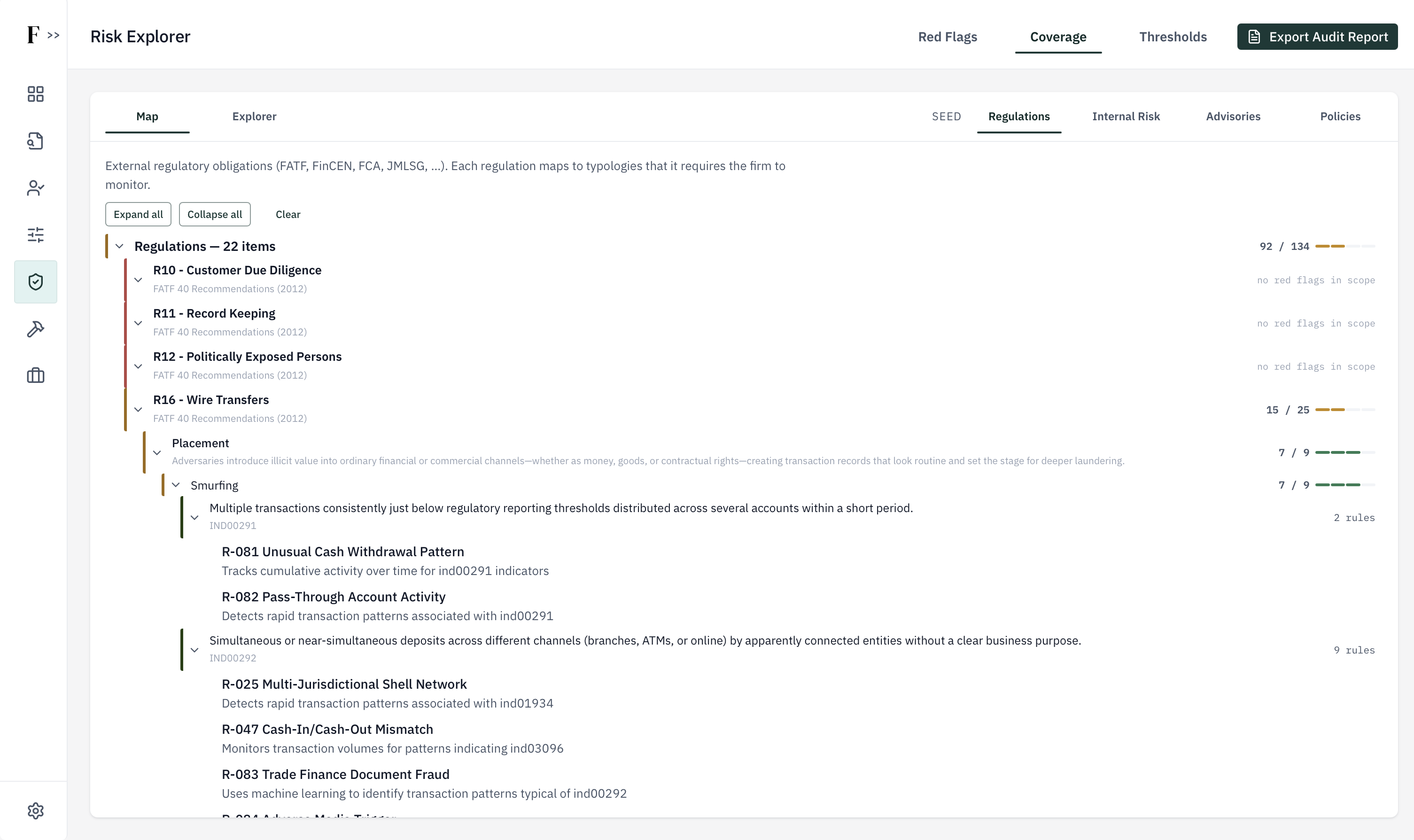
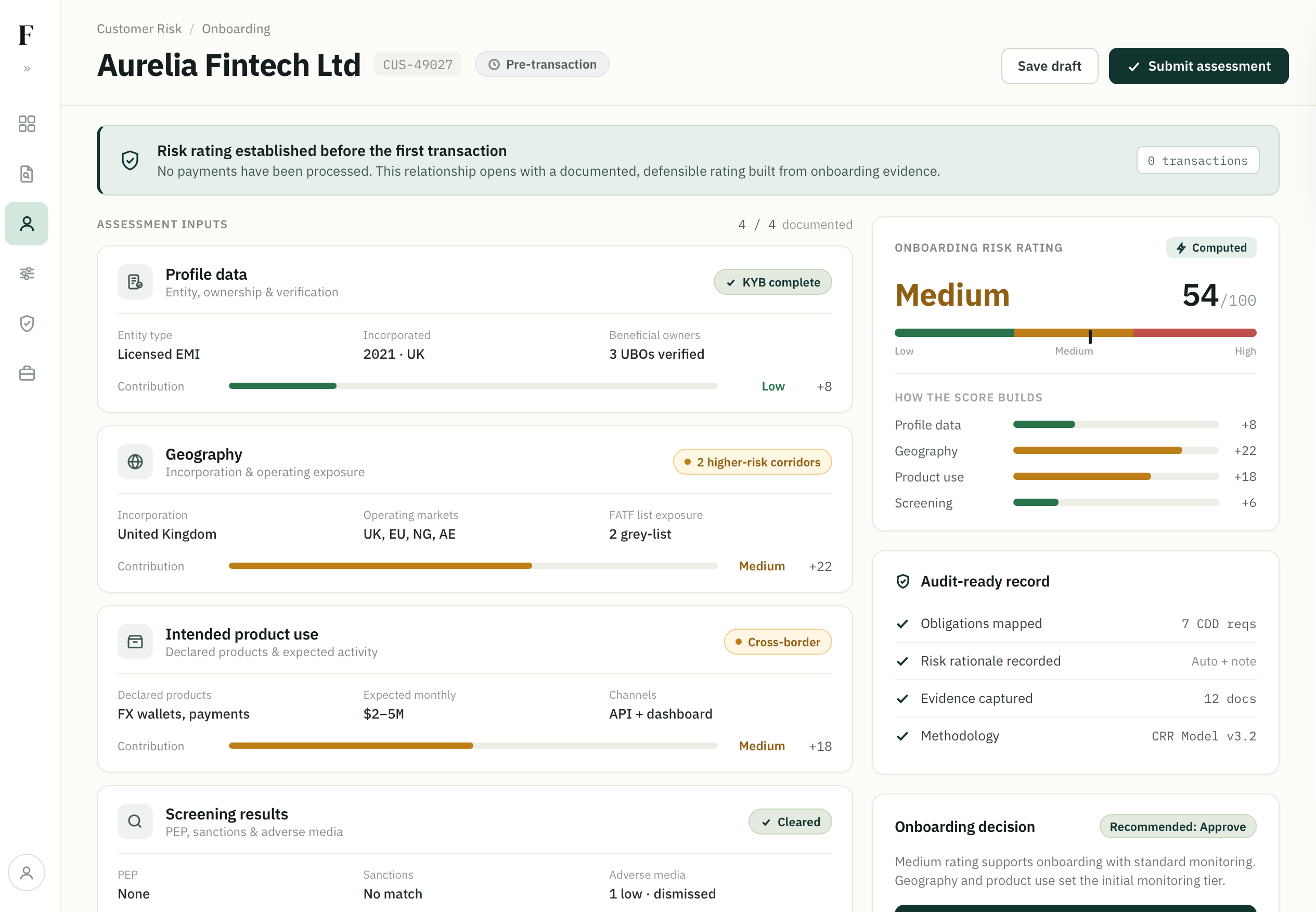
Detect transaction laundering across your merchant base
Merchant portfolios create AML exposure that consumer monitoring frameworks weren't designed for. Take transaction laundering: a compliant-looking merchant processing for an undisclosed business. It creates regulatory, scheme and financial exposure that chargeback data won't surface.
Transaction laundering detection comparing declared activity with actual transaction patterns
PEP and sanctions screening of merchant principals and UBOs, with continuous re-screening
Adverse media monitoring surfacing risk signals ahead of formal listing
Merchant accounts used as payout rails identified through flow analysis
SAR-ready case files with structured evidence
Catch declared-versus-actual deviations early
The post-onboarding window is where hidden business models, mule-like flows and borrowed legitimacy appear. Monitoring early-life behaviour against KYB declarations makes intervention possible before a pattern embeds.
Declared-versus-actual monitoring from day one: activity, corridor, volume and product mix
Risk-tiered monitoring that adapts as behaviour changes
Early-life signals linked to KYB attributes, principals and related entities
Investigation-ready evidence captured as signals emerge
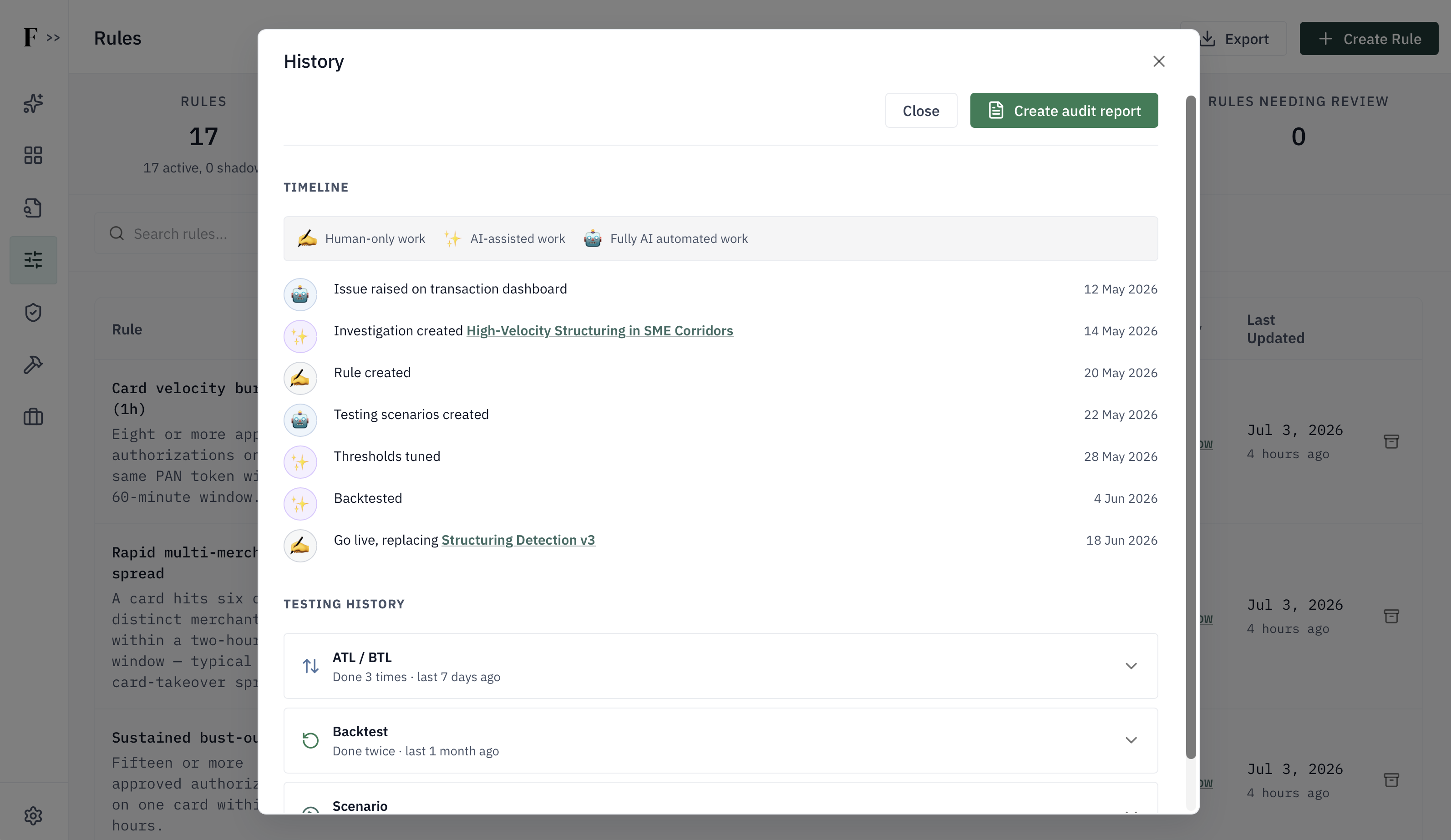
A defensible trail from signal to decision to outcome
When schemes, banks or regulators ask "what did you know and what did you do?", the hardest part is reconstructing the story. The rationale and evidence trail build as your team works – alerts, screening hits, decisions and outcomes tied to the audit record throughout.
Structured investigation workflows with consistent decision capture
Regulation- and policy-aligned evidence attached to each case
Full traceability from detection logic to alert to action taken
Outputs that support internal review and external reporting without rework
"Transaction laundering never showed up in our chargeback data, so undisclosed businesses slipped through. Now declared-versus-actual monitoring and continuous screening surface financial-crime risk early, with SAR-ready evidence built as we work – our exam conversations are far easier.”
Why choose Fortify
01
Works with the data you already have. Transaction flows, chargeback history and merchant behaviour form the basis of detection. Build and test controls without waiting for additional data.
02
Clear view across the full portfolio. Risk is visible across merchants, PayFacs and sub-merchants, with monitoring that adjusts as behaviour changes. Exposure that wasn't directly onboarded does not sit in a blind spot.
03
Decisions backed by evidence. Test rules before deployment and understand their effect on chargebacks, scheme ratios and approval rates. Decisions are documented and audit-ready.
04
Fraud and AML in one place. Transaction monitoring, merchant risk scoring and AML controls operate in the same platform. Transaction laundering detection, screening and scheme ratio management sit in the same workflows.
Continuous
Hours not weeks
Full visibility
Based on results from Fortify customer deployments
Merchant risk lands at settlement.
Your controls need to keep up.
Fortify is built for the people accountable when a merchant, sub-merchant or PayFac creates exposure they didn't directly onboard – Heads of Fraud, MLROs and risk and compliance teams at merchant acquirers, carrying portfolio-level accountability and scheme-threshold pressure. The platform is designed by practitioners who've run these functions, and backed by a team that works alongside yours in the day-to-day.
Built by practitioners
Every feature was designed by people who've sat in your seat – running fraud and compliance teams at acquirers and processors, accountable for portfolio-level risk, chargebacks and scheme ratios. The product works the way your team already thinks.
Your team + our team
Decision-making software backed by embedded expertise. Your fraud, risk and compliance teams get both the platform and the people to run it with.
Assist analysis without losing control
Risk builds across merchants, sub-merchants and PayFacs. Surface it early, with human judgement intact.
Surface coordinated patterns across merchants, sub-merchants and PayFacs before they compound
Flag where dispute or laundering signals are building in the portfolio
Link related merchants and shared principals for faster investigations
Keep all actions visible and reviewable
For teams operating under regulatory scrutiny.

Step 1
Describe the attack. For example: a cluster of bank-detail changes hits your contractor population 48 hours before payday.
Step 2
Get a retrained model in minutes, built from your input and Fortify's detection logic.
Step 3
Test before deploying. Human judgement stays in the loop.
3 minutes. Not months.
One modular system for fraud and AML, built around how teams actually work
Related articles
Regulatory guidance and industry context for financial crime professionals.

.avif)


Built for acquirer risk teams managing portfolio exposure at scale
Detection that acts before settlement, visibility across the full portfolio, and controls that stand up to scheme scrutiny and AML obligations

