When transaction volumes grow, alert queues grow with them. The team rarely does.
Banks manage layered risk across products, entities and jurisdictions. As volumes rise, detection gaps open, rules drift and analyst time goes to the wrong work. Fortify gives fraud and AML teams what they need to close those gaps. It's built by people who have run these programmes at large financial institutions


High volumes, real gaps
As your product evolves, risk changes faster than your controls.
Data in every system, insight in none
Banks hold onboarding records, transactions and case files going back years. Most of it sits in systems that were never designed to talk to each other. Without the full picture, the patterns that span accounts, entities and geographies stay hidden.
A new typology lands. The rule change is still weeks away.
Every new typology, product or corridor requires a rule change. Getting that change through engineering queues takes weeks the fraud doesn't wait for.
Your most experienced analysts are doing your least analytical work.
Most of what an AML analyst does in a week does not require an AML analyst. Alert triage, SAR narrative drafting, case documentation. These tasks eat up capacity without adding analytical value. They are where the staffing problem actually lives.
Built for fraud teams, AML teams or both
Fraud and AML functions at banks often run on separate tools, with separate workflows and reporting chains. Fortify brings detection, testing, investigation and regulatory reporting into one system. For fraud, for AML or for both.
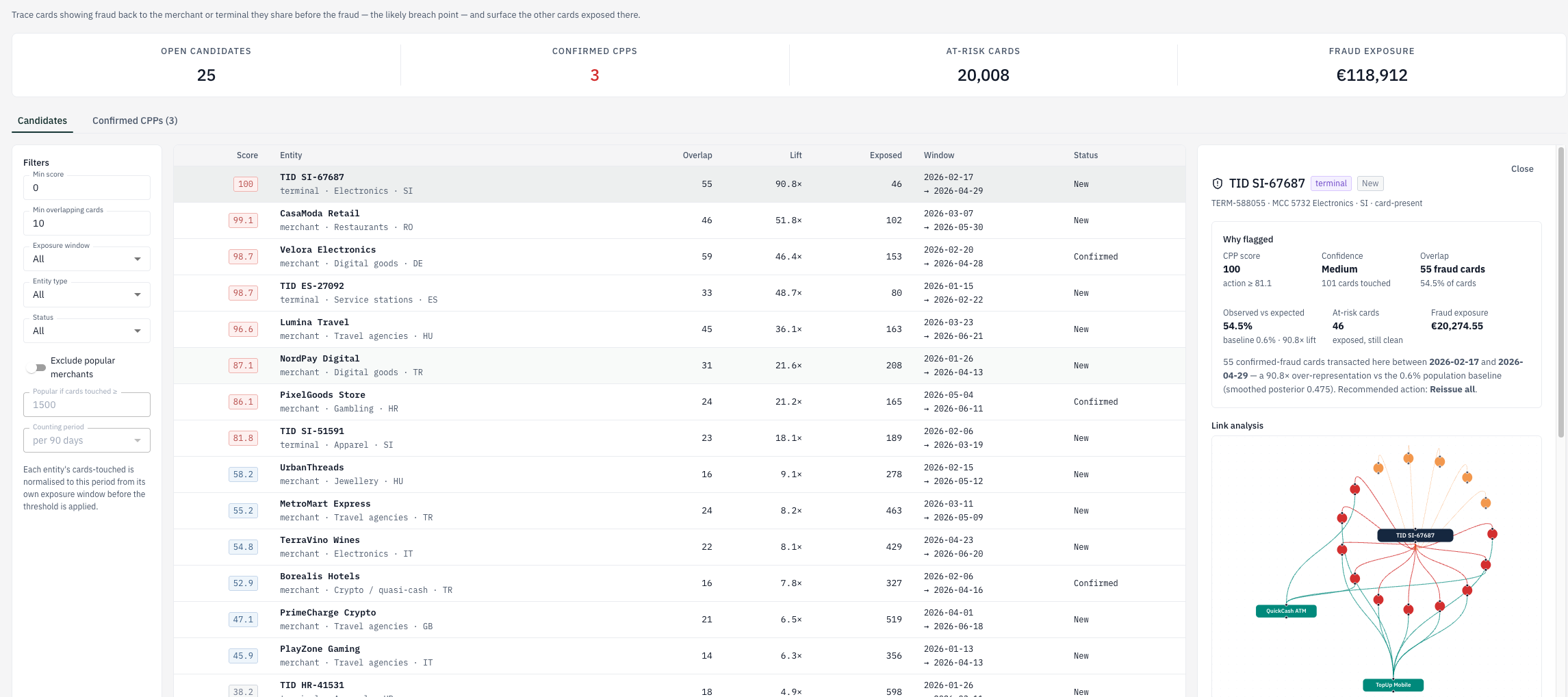
Connect fraud signals across your systems
Bank fraud rarely sits in one system. Payment flows, account changes, device signals and customer context spread across platforms, letting coordinated patterns build undetected until losses scale.
Link activity across accounts, channels and entities to surface coordinated abuse
Detect emerging patterns by combining behavioural and transactional signals
Prioritise by exposure and likely loss impact
Investigate from a unified view, with full context in one place
Reduce false positives, protect the customer journey
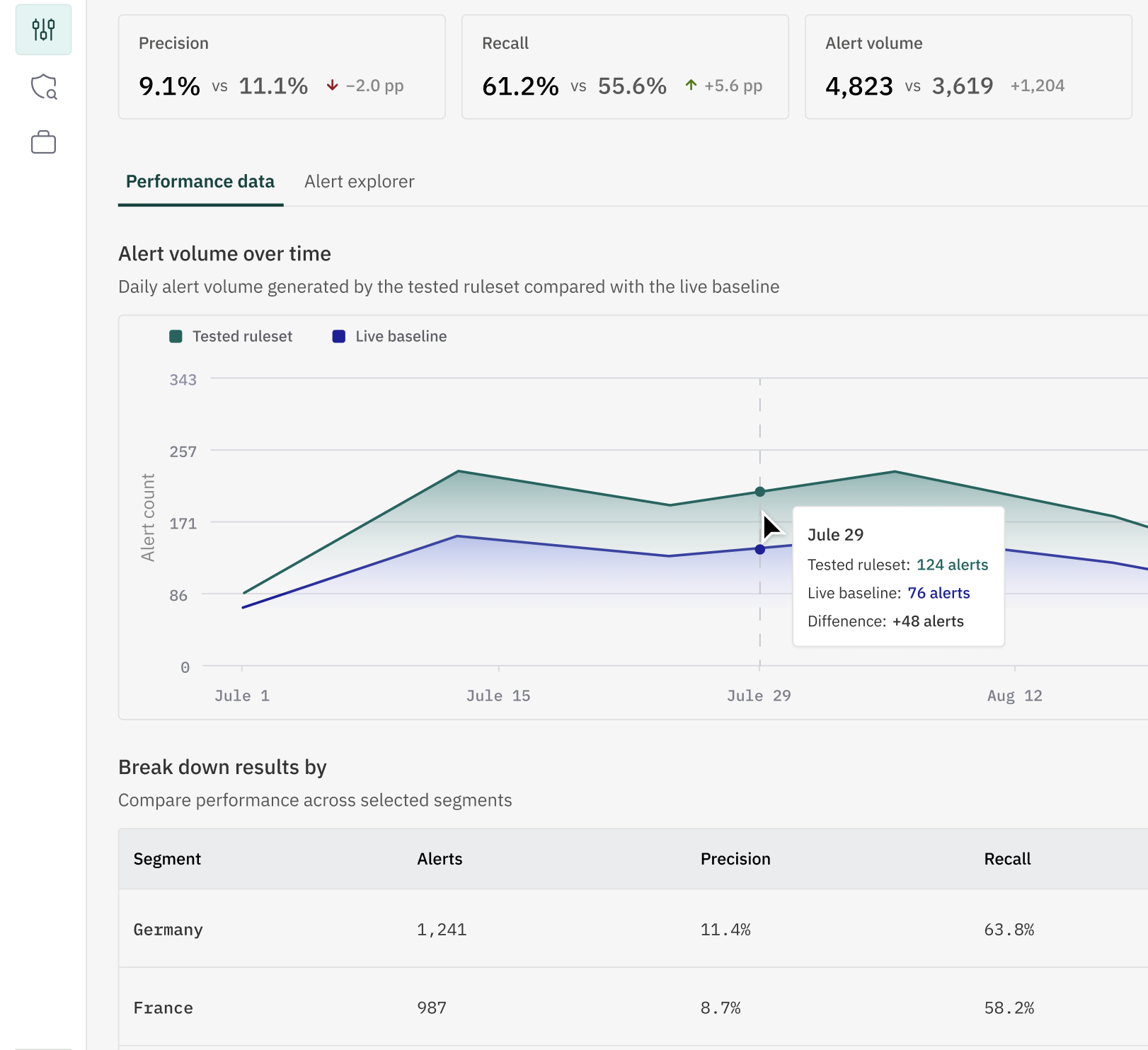
Banks face constant pressure to stop fraud without adding friction. Test changes against historical data, see the downstream impact before deployment and keep a clear evidence trail. That makes control tuning fast and defensible.
Backtest rule and threshold changes on real history before deployment
Measure trade-offs: catch rate, false positives, operational load, customer impact
Segment controls by product, channel, customer cohort or corridor
Deploy changes without engineering support
Emerging pattern to tested control, same day
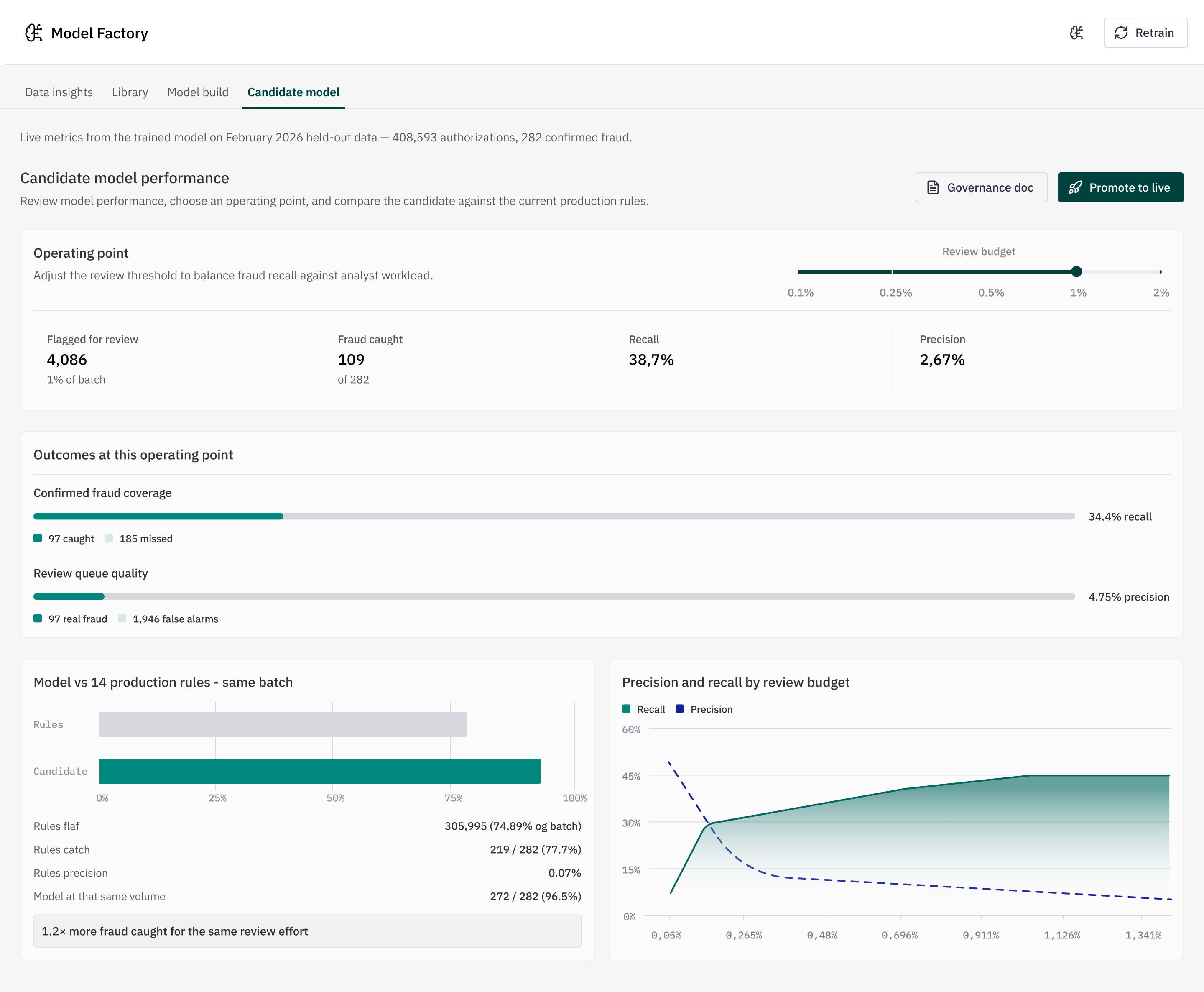
Attackers adapt faster than quarterly releases. When a new pattern surfaces, turning analyst insight into rules or models, validating it against your data and deploying safely should take hours.
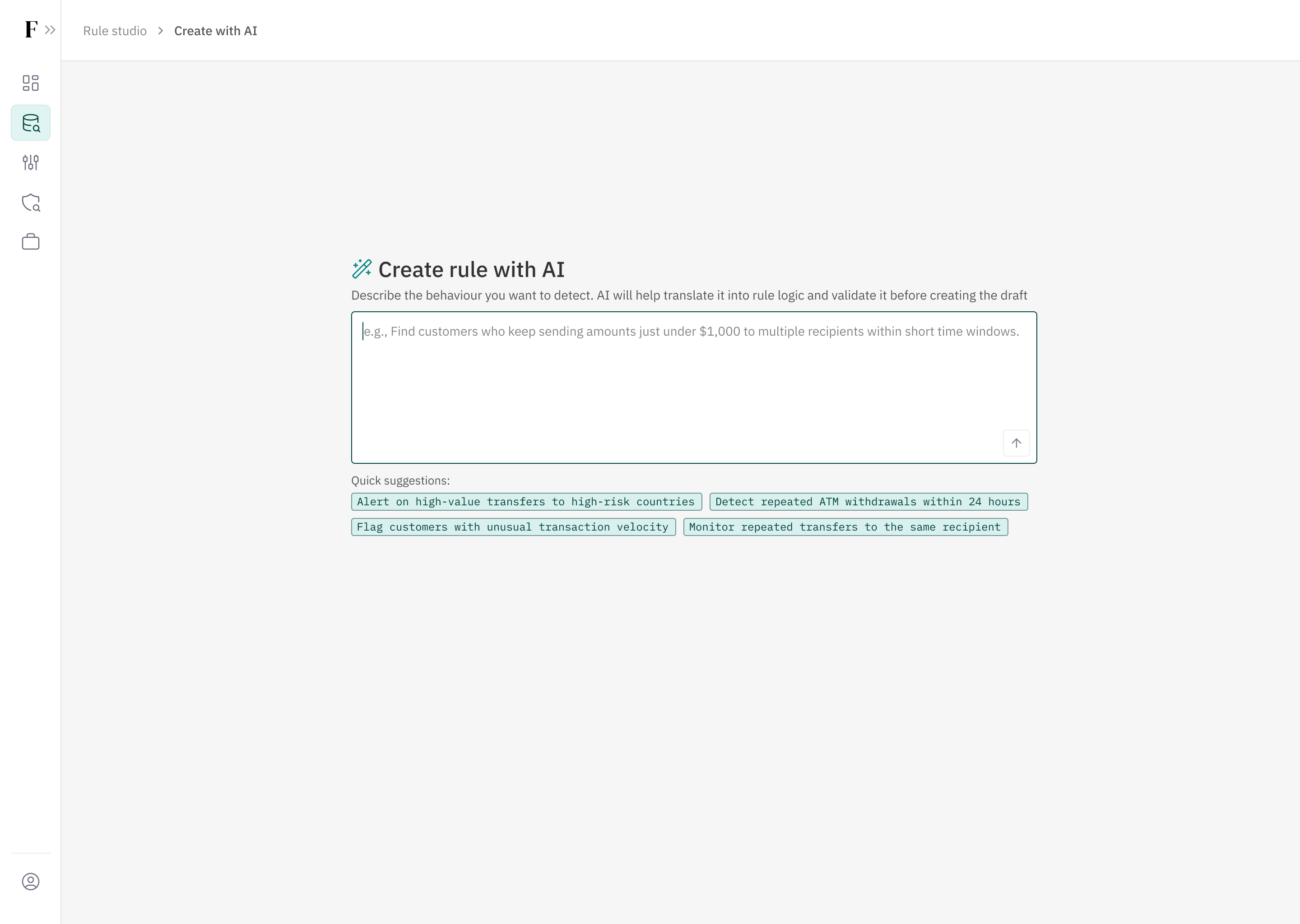
Write and amend rules in plain language, without SQL or engineering support
Retrain models from analyst-observed patterns, with human judgement in the loop
Compare approaches side-by-side before deployment: volume, precision, impact
Rollout with a clear record of what changed and why

"Coordinated fraud used to hide across our systems until losses scaled. Now the signals sit in one view, and a new pattern becomes a backtested, live control the same day."


Why choose Fortify
- 01
Built by people who've run bank programmes
The team has run fraud and AML functions at large financial institutions, so the platform reflects where detection gaps actually sit, what makes control updates slow, and where analyst time goes.
- 02
Controls your team can update without engineering
Rules and scenarios can be written, backtested and deployed by fraud and compliance directly, without waiting on IT queues.
- 03
A team that stays accountable after go-live
After launch, the team works alongside yours and stays accountable for what the programme produces.
Single view
Fewer false positives
Same-day
Based on results from Fortify customer deployments

Volumes keep rising. Your controls need to keep up.
Fortify is built for the people accountable when detection gaps open across products, entities and jurisdictions – Heads of Financial Crime, MLROs and fraud and AML teams at banks and large financial institutions, carrying regulatory scrutiny across the whole book. The platform is designed by practitioners who've run these functions, and backed by a team that works alongside yours in the day-to-day.
Built by practitioners
Every feature was designed by people who've sat in your seat – running fraud and AML programmes at large financial institutions, accountable for detection coverage across every product and jurisdiction. The product works the way your team already thinks.
Your team + our team
Decision-making software backed by embedded expertise. Your fraud, risk and compliance teams get both the platform and the people to run it with.
Assist analysis without losing control
Risk spans products, entities and jurisdictions. Surface it early, with human judgement intact.
Surface patterns that span accounts, entities and geographies before they backlog
Flag where detection is drifting across products and jurisdictions
Link related accounts and entities for faster investigations
Keep all actions visible and reviewable
For teams operating under regulatory scrutiny.

Step 1
Describe the attack. For example: a cluster of bank-detail changes hits your contractor population 48 hours before payday.
Step 2
Get a retrained model in minutes, built from your input and Fortify's detection logic.
Step 3
Test before deploying. Human judgement stays in the loop.
3 minutes. Not months.
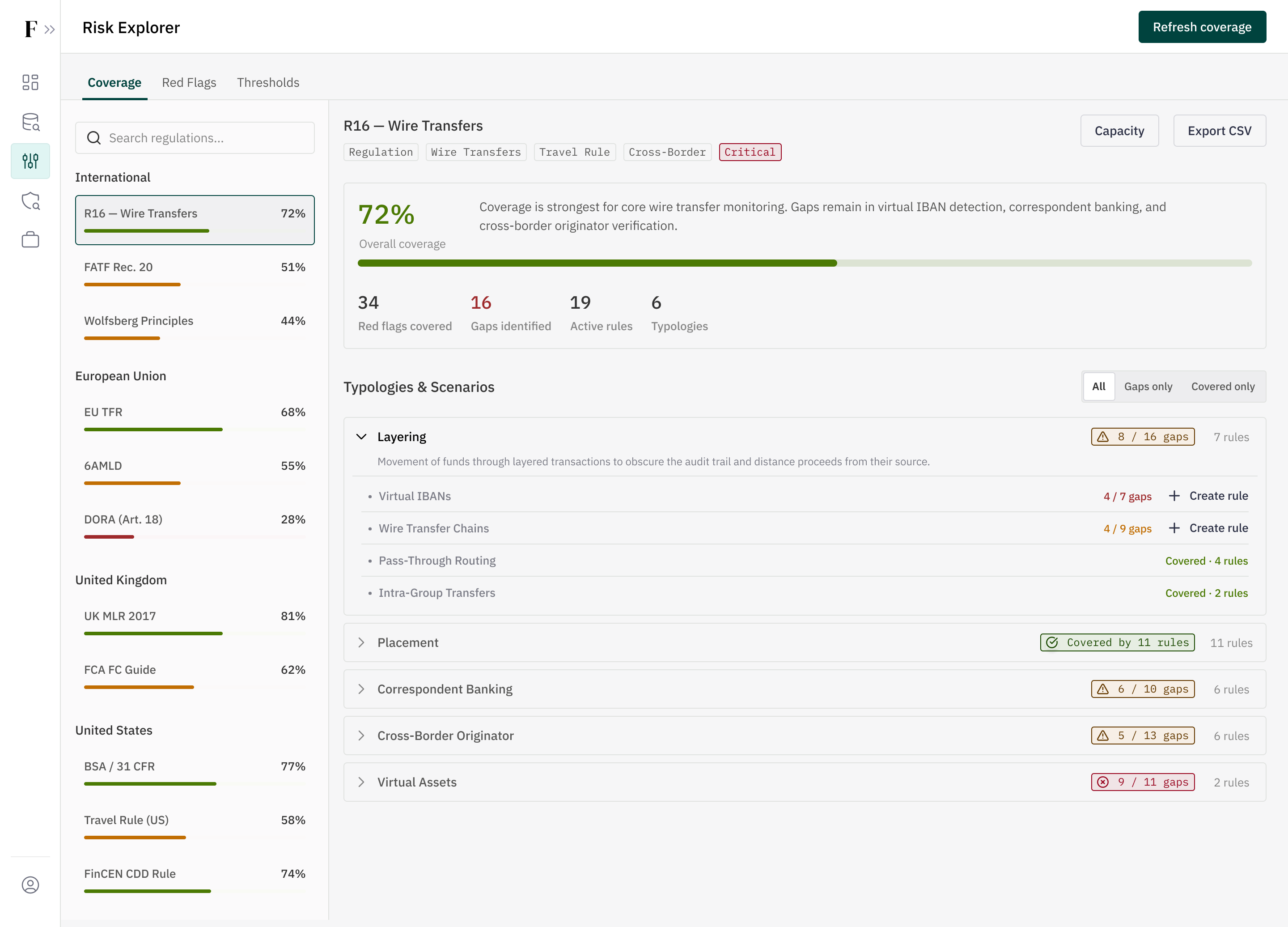
Spot coverage gaps before they become exam findings
AML risk moves across entities, products and geographies. Data is often split across core systems, onboarding, payments and case tools. That makes gaps in monitoring hard to see until a review forces the issue.
Link customers, accounts, entities and counterparties to surface hidden connections
Coverage visibility by product, jurisdiction and customer segment
Monitoring logic tied to the data it relies on, with gaps surfaced clearly
Risk ratings that update as customer behaviour and exposure change
Write, test and deploy AML controls without engineering
When a new typology surfaces or a corridor changes risk profile, AML teams need to respond quickly. Pre-built typologies give a starting point; from there, scenarios can be written, backtested and deployed without a development queue.
Pre-built typology monitoring across products and jurisdictions, calibrated by segment
Write and amend scenarios in plain language, without SQL or engineering support
Backtest against historical data before anything goes live
Calibrate thresholds by segment and risk tier to reduce noise without losing risk capture
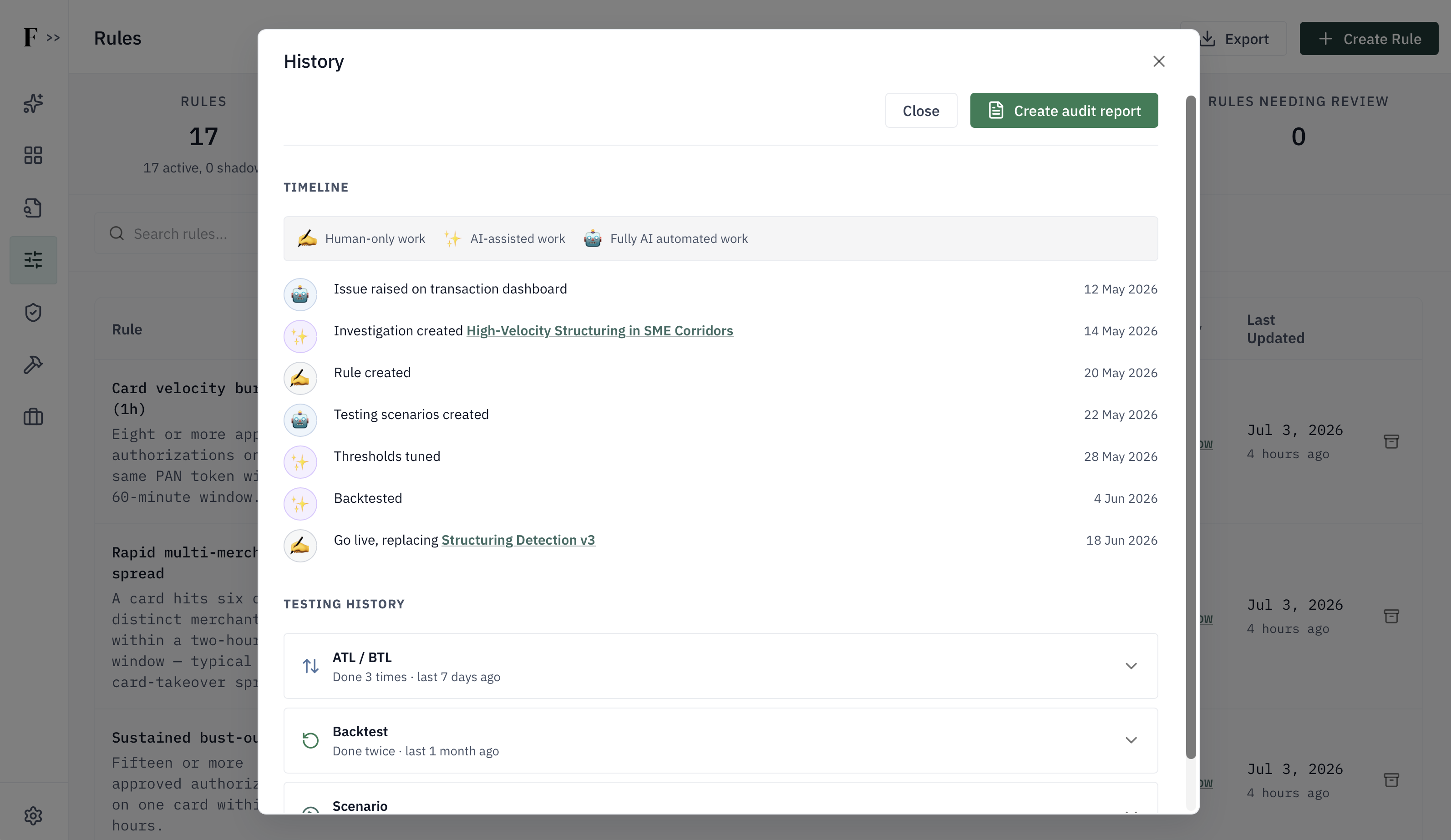
Evidence built as you operate, traceable from control to outcome
Banks are judged on consistency and defensibility: whether decisions are traceable, well-reasoned and tied to obligations. Structured case files and a complete audit trail link controls, investigations and outcomes. Exam readiness becomes continuous.
Structured case files capturing rationale, evidence and outcomes end-to-end
Rule-to-obligation traceability and continuous audit trail
Consistent decisions across teams and jurisdictions
Reporting outputs generated from the workflow, without manual reconstruction
"For the first time, our monitoring actually reflects our risk view. We're not running two separate systems any more – risk scoring and monitoring are one conversation."
Why choose Fortify
- 01
Built by people who've run bank programmes
The team has run fraud and AML functions at large financial institutions, so the platform reflects where detection gaps actually sit, what makes control updates slow, and where analyst time goes.
- 02
Controls your team can update without engineering
Rules and scenarios can be written, backtested and deployed by fraud and compliance directly, without waiting on IT queues.
- 03
A team that stays accountable after go-live
After launch, the team works alongside yours and stays accountable for what the programme produces.
No blind spots
Hours not weeks
Always audit-ready
Based on results from Fortify customer deployments
Volumes keep rising. Your controls need to keep up.
Fortify is built for the people accountable when detection gaps open across products, entities and jurisdictions – Heads of Financial Crime, MLROs and fraud and AML teams at banks and large financial institutions, carrying regulatory scrutiny across the whole book. The platform is designed by practitioners who've run these functions, and backed by a team that works alongside yours in the day-to-day.
Built by practitioners
Every feature was designed by people who've sat in your seat – running fraud and AML programmes at large financial institutions, accountable for detection coverage across every product and jurisdiction. The product works the way your team already thinks.
Your team + our team
Decision-making software backed by embedded expertise. Your fraud, risk and compliance teams get both the platform and the people to run it with.
Assist analysis without losing control
Risk spans products, entities and jurisdictions. Surface it early, with human judgement intact.
Surface cross-corridor patterns before they backlog
Flag where detection is drifting across products and jurisdictions
Link related accounts and entities for faster investigations
Keep all actions visible and reviewable
For teams operating under regulatory scrutiny.
Step 1
Describe the attack. For example: a cluster of bank-detail changes hits your contractor population 48 hours before payday.
Step 2
Get a retrained model in minutes, built from your input and Fortify's detection logic.
Step 3
Test before deploying. Human judgement stays in the loop.
3 minutes. Not months.
One modular system for fraud and AML, built around how teams actually work
Related articles
Regulatory guidance and industry context for financial crime professionals.

.avif)


Built for fraud and AML teams who care about outcomes
Detection that's calibrated, controls that update without queues, evidence that holds up.

